Sunday, January 31, 2021

The Experiment

 We'd just moved onto a ten-acre plot of land, only a farmer's wheat field and a forest trail away from the country school of Waterloo Elementary. I remember a dusty back road, sunshine, and tall spruce trees. My grade-three teacher, Mr. Baker, looked like Santa Clause. He called me 'love' and read the Hobbit out loud to our class every day. 


To me, that small school of one hundred kids felt enormous. Over the last four years, homeschooling had left me with an inflated sense of self and no understanding of social norms and taboos. Some of this was good (I was willing to make friends with anyone). Some things were hard. As a homeschool kid, I believed my parents knew everything about fashion and being cool. So I let my mom dress me in a white turtle-neck and bright pink corduroy overalls with big white buttons for my first day. That was a mistake.


I learned fast, though. I figured out who the cool kids were. I dressed like them and worked hard to insert myself into their social circles. I wore baggy sweatshirts and ripped jeans. I side-parted my long hair from one ear to the other. Being at the right place, at the right time, with the right people, saying the right things meant everything to me.


Fricken grade three. After about six months, I felt like I had done it. I was popular. It was exhausting. I spent more brainpower maintaining my social status than learning my multiplication tables (and it shows to this day, pop quiz me 12X7, and I'll panic a little inside).   


And then came the Experiment: the Day that Changed Everything.


A skinny young man with leather writing patches on his blazers' elbows came to visit the class. He explained that he was doing an experiment around the way people communicate with one another. 


We all received folding cardboard blinders to prop up on our desks and a handful of colourful wooden blocks. The man explained that he would build something with blocks behind the blinder he'd set up for himself at the front of the room.


Then the young man pulled out a floppy $100 bill from his wallet and waved it through the air. The room became pin-drop silent. 


"If you can build your blocks exactly the way that I build mine, simply by listening to my instructions, I will give you this $100 bill right now," he said.


We grabbed our blocks and buried their heads into our makeshift cubicles.


"Put the green triangle on the orange square. Put the purple triangle next to the orange square, put the blue triangle on top."


The room vibrated with focus, each kid laying their blocks with the precision of an "Operation" game player. After setting a few blocks down, I leaned back a little to stretch my neck. I accidentally caught a glimpse of another kid's blocks, and a shock ran through me.


I glanced towards another desk and what I saw confirmed my suspicion: both kids on either side of me had arranged their blocks differently from mine. I'd been placing my pieces in parallel to one another while the other kids had stacked their blocks horizontally into pointy towers. I'd been doing it totally wrong.


In a flash of panic, I destroyed my design before anyone else could see. I rebuilt the blocks to match the towers of my friends. How could I have been thinking so wrong?


To this day, this story still hurts to think about, much less write. The young man at the front finished describing his pattern, and we all dropped our blinders. 


Everyone in the class had built neatly stacked piles of blocks. However, the young man's blocks were arranged flat and parallel to each other, precisely how I'd set mine up a moment before.


The young man blew out his cheeks and laughed. He waved his $100 bill once more in the air before tucking it back into his wallet.


"You know," he said, "I've done this experiment at dozens of schools, and no one has ever replicated one of my patterns, but I still get nervous every time."


And I knew, with terrible, finite certainty, that no one would ever believe that I had matched his pattern but then destroyed my work moments before the reveal... all because I was afraid of being different.


It was a bitter pill to swallow, but the lesson behind this moment imprinted upon my young brain and encoded itself into my DNA.


That I must never EVER be the same as anyone else, ever again.


Which, of course, is a philosophy that has led to all sorts of misadventures (stories for another time). But it sure makes life interesting.


And I don't even care whether you believe me or not.

😆

Tuesday, January 12, 2021

Dryuary: Drying out and levelling up


Sometime halfway through November, I realized I was drinking more than I wanted to. Savouring an occasional glass of wine had turned into drinking nearly an entire bottle to feel the same sort of heady buzz. My alcohol tolerance had gone way up, and my standards for the type of wine I was willing to consume had gone way down. I could also see that my need for wine to relax at night and the hangovers I had in the morning were encroaching on the quality of time I could give to my family.


I tried cutting back on my own, but a few slip-ups left me frustrated and regretful. I journaled, I struggled; finally, I reached out. I found accountability vital to weaning me off alcohol, but it's also the most challenging part. There is such a stigma around admitting that you are regularly consuming more alcohol than you should. It's a shameful and taboo subject.


I find this attitude a little strange. I mean, a large majority of us drink regularly in some form or another, so it follows that many of us also find ourselves somewhere on the slippery slope of addiction to alcohol. The biggest revelation that I've had in the last month is that the saying "alcohol and drugs" is wrong. Alcohol is a drug. Full stop.


Now, I know this blog is supposed to be about creativity, but for me, the practice of living a creative life includes mental and physical wholeness. My love for good wine was out of balance; to live a full and creative life, I need to regain control.


Many of my thoughts around this subject are inspired by the book "The Naked Mind" by Anne Grace. Like me, if you want to, at least, moderate your drinking, I highly recommend her work. I find it especially effective as an audiobook.


Nicotine is a drug; caffeine is a drug. Our bodies naturally build tolerances to these substances, and we need to consume more to have the same desired effect. We also develop dependencies on these drugs, making it hard and painful to stop using them even when the drug no longer gives us the buzz we initially felt, even though we now consume our drug of choice simply to feel normal. 


Alcohol is a drug. There's no clear line between "them"(alcoholics) and us. We're all consuming the same substance, and we're all on the same path. If you drink regularly, it's pretty much inevitable that you will someday develop a dependence on the drug called alcohol and encounter its harmful side effects. As so many of us drink, I'm writing this blog post because I'm sure many of you have felt the same as I have;


That just maybe, you're drinking too much.


I didn't like what I was doing back in December. The irony is, the wine really flows around the holiday season. In an effort to cut back, I gifted my neighbour with a bottle I'd purchased to drink on Christmas, only to discover a bottle in the gift bag she'd given me in return. But I had some help. I'd connected with a friend who also wanted to take a break from drinking, and the accountability stopped me from pouring a glass with dinner. Instead, I indulged in hot chocolate with foamy cream, mini marshmallows and a dash of cinnamon.


It took me about ten days before I felt the physical cravings for alcohol subside. It was absolutely a battle, and honestly, I threw my calorie diet out the window and used sugar as a substitute to help manage my cravings. It was the holidays and boy, did I eat a lot of chocolate and candy!


Once the physical cravings subsided, the mental ones continued. My mental wish for alcohol forced me to examine what made me want to consume in the first place. We often say that we use alcohol to relax, but now I asked why. Relax from what? And how can I make that stressful situation better rather than reaching for a drug to numb my feelings about it?


For me, this involved a sit-down talk with my two little precious girls. I told them, nicely, that when mom is trying to sear a pot-roast, it is a very bad time to start spin dancing next to the stove and bickering about who gets to build a googly-eyed monster with the last fuzzy pink pipe-cleaner.


Among other things. :)


So yeah, establishing clear boundaries in my life has helped me lessen the number of triggering stressors that gave me the mental urge to reach for a glass of wine.


I remember the first time since choosing to abstain that I felt mentally overwhelmed, and I wanted a glass of wine. I was about to grab the bottle when I thought, 'this is a good time to see what happens without it.' I won't lie, that night was a hard one, but it also forced me to do the work to address the problem I was trying to run from. Wine doesn't solve problems; it just stops you from dealing with them. In the morning, your situation is still there, and you've got a hangover.


So instead of drinking, I choose to deal. :)


And remember that bottle of wine from my neighbour? I still have it. I actually like the fact that I have alcohol available. It means that I could drink wine, but I choose not to.


Another reason that I was drinking was because of physical pain. Typing over a keyboard, crafting, and painting all give me great joy, but they also all put incredible strain on my neck. As a reward for abstaining from wine, I am using that money towards a monthly massage instead. :) 


If you are interested in drying out for the short or long term, January is an excellent time to start. Many communities now recognize this first month of the year as 'Dryuary,' giving you a built-in support system towards regaining control. Just google it. :) It's a unique and affirmative movement, and I'm so excited to be participating this year.


However, please consider your level of physical addiction. Going completely cold-turkey on your own may not be safe for you if you have a high level of dependance. That's when your doctor may need to become involved. Be safe, be honest, and know you are not even close to being alone in your struggle!


To be honest, I'm not ready to give up alcohol altogether. I want to be drinking for the right reasons, and I want to be in control of alcohol, not the other way around. Ideally, I'd like to return to the occasional glass of wine on special occasions. Realistically, I know this may not be possible. Physical addiction to a drug changes the structure of our brains. I may find that I now permanently struggle to moderate my intake. It's something to watch out for!


In the meantime, I'm currently in the market for some delicious gourmet hot chocolate. Any ideas?


Sunday, January 3, 2021

Alchemy Rose


A few years ago, I investigated the long-stemmed roses in front of our new rental house. I'd never been much of a gardener, and I believed that if the plant didn't produce food, it wasn't worth my effort. There were six bushes. Aphids and powdery mildew covered the buds and leaves, yet the stems looked strong. 

It was a dark time in my life; I'd been experiencing debilitating depression and anxiety-driven blackouts. I needed something to distract my mind from the pain and fear I felt. I found a rusty pair of shears and scoured them clean with steel wool. 

I decided I couldn't make things much worse. 

I had no idea how to care for roses. I began by cutting away the diseased and mildew-covered parts. I washed buds with water, knocking and shaking all the aphids to the ground. I cleaned my shears and did it again the next day, and then the next.

My beautiful roses exploded. I harvested the blooms and filled our house: roses in the kitchen, roses in the entranceway, a bouquet on the dining room table, vases in the bedroom. I carefully cut the blooms, clearing the way for new baby buds and coaxing the bushes to grow in attractive shapes. 

The roses didn't need any special knowledge to bloom. Their roots were deep, and the oldest stems were wooded and robust. They just needed someone to care. I visited my plants daily, checking the leaves, trying to understand.

When I couldn't get out of bed for me, I would get out for my roses. I needed to check on them. The summer came with forest fires, toxic air, and the most severe water restrictions I've ever experienced. I saved dishwater and fed the roses by hand. Even through the wilting heat, the blooms continued.

And then a week or so went by where I had no time to prune. Rose blooms bobbed on stems up to six feet tall, wild and gangly, waving in front of the windows like cheeky toddlers. My human children needed me and the days slid by without giving me a chance to work in the garden.

Finally, I made it out one early morning. I walked down the little path that spans the width of our house, and a vice gripped my heart. Where there had been roses, wild, brazen, and thorny, laden with heavy crimson crowns, there were now only stumps.

Clusters of torn leaves and woody stems, hacked to about a foot off the ground were all that remained.

Shock blacked the edges of my vision, and then came a wave of horror. Next, I felt stomach-turning guilt. This was my fault; the roses had grown too wild. My landlord must have seen the untended roses; he must have wanted things to look neater. Maybe he thought he was helping. A sense of rage and helplessness washed through me. He was in the right; it WAS his yard... but I'd loved them. 

I wept that day. I ran into the guest room, locked the door and closed the curtains. I knew they were just flowers, but we'd grown together. I'd healed them, and they'd coaxed me out into the sun. 

I sobbed harder than I'd cried in recent memory. The hacking of those stems shattered my heart. And yet--strangely--the experience felt good. Whenever my tears slowed, I would dredge up another painful thought and cry some more. Soon I wept not just for the roses but also for myself. I cried until there was nothing left to cry for; until there was nothing left but the raw truth I'd known all along:

That the stems were strong, the roots were deep, and the blooms would come again in spring.

And they did.


Monday, December 28, 2020

Totem Reveal

I have been doing a lot of soulsearching lately. I'm trying to understand who I want to be as an artist. The plan is to gain a clear vision of what I'd like to communicate through my art in this season of my life. I will then take that vision and channel it into my projects for 2021. I've got some fantastic ideas! If you're interested in getting the inside scoop, I'd be honoured to have you sign up for my monthly newsletter

If you are already a subscriber, thank you so much! Your love and support mean the world to me, and guess what? This post will be review for you. Can I offer you an alternative? My poor YouTube songwriting channel REALLY needs some sweet love. Click here to listen to a song or two and tell me what you think. 

So,

my soulsearching ended up looking like this:


In summary, I've discovered that I create art (use symbolism) because I want to encourage healing by restoring relationships.

Pretty much everything else grows out of this central thought. I have this idea that first, we need to heal the relationship we have with ourselves. 'Healing within' means finding wholeness and balance between our physical, mental, and spiritual needs. I have found that when I make my personal health a priority in all these areas, I have more to give to those around me.

So that leads me to my next thought: the healing of relationships within society. It starts with our close friends and family. We need to extend the grace we give ourselves to others. In other words: the more consciously accepting I am of my imperfections, the more I'm able to cut those around me a little slack (hint: laughter is key). And guess what? A healthy support system that gives and receives grace provides us with the strength to reach out to our communities. In my head, I see a picture of ripples of grace, expanding outward in widening circles: like when a rock is thrown into a pond.

Finally, as we heal ourselves and recognize the humanity that we all share, we also need to understand that human beings exist within a larger natural ecosystem. We are a part of this world. Nature and her systems aren't something that exists 'out there' beyond the comfort of our homes and cities. We are a part of the natural world, whether we recognize it or not. Unfortunately, our relationship with nature is, more often than not, destructive.

We need to reintegrate into this world's ecosystem by accepting our place within it (not lording over it). I would love to see a city with porous concrete and rooftop gardens. I wish to see human civilization embrace the filtering and recycling systems of nature, rather than destroying these systems and then discovering to our shock that our environment is becoming toxic.

I think I saw a meme once that said: imagine if trees gave free wifi rather than just clean air: there'd be a forest in every yard.


Thanks for sticking with me this far! You're a true friend! I know it's a lot. Welcome to the busy chambers of my brain!

Okay. Check this out.


It's a model of the universe presented by Johannes Kepler, an astronomer from the 17th century before there were proper astronomers. 

Basically, Kepler took the mystical study of the heavens at the time and added, well, math. He built upon the ideas of that heretical crackpot Galileo (the guy that dared to consider that the earth might NOT be the center of the universe) and improved on it. Kepler used mathematical equations to describe the movement of planets around the sun. In doing so, he set the groundwork for Newton's description of gravity. 

Consider all of this against a backdrop of Europe smack in the middle of the Dark Ages: warring fiefdoms, starvation, and smallpox everywhere! And yet, Kepler's ideas set the foundation for the "Age of Reason" about 100 years before it bloomed and bore fruit.

It's a story that gives me hope. I won't deny that our world can look bleak right now, but I am encouraged by the idea that today's creativity might sow seeds for a new age of reason tomorrow. This concept is why Kepler's model has become the inspiration for my new totem/logo.


My logo speaks to a few ideas at once. It represents both interconnectivity and innovation. It touches the past and inspires me to look to the future. Kepler was driven by a sense of childlike wonder that he carried with him throughout his entire life. It's a gift I'd like to give through my art.

With love,

Charity


Friday, December 18, 2020

It's Worth it to be Weird


A good friend of mine, Ingrid, recently wrote me the sweetest letter. She talked about how she's been teaching a class in systems and administration, and it hasn't been a comfortable experience. She told me how vulnerable she felt, speaking on something she is so passionate about. Ingrid's feelings of inadequacy and the fear of being judged make her wonder if it's even worth it to be vulnerable and show people her true self.

Now, Ingrid is brilliant and strong-willed. She refuses to wallow in self-pity and always bootstraps herself out of bed and back into her busy, productive life. And she knows the answer to her own question: of course it's worth it to be vulnerable!

Ingrid's letter gave me so much joy. Systems and administration are NOT natural giftings of mine. However, I have learned that they are the 'yin' to my creative 'yang.' Without a system to help me focus and stay on track from one day to the next, I don't think I would be able to get anything done! Much less eat properly, spend meaningful time with my loved ones, etc. I'm in awe of Ingrid's natural bend in this area, and I would TOTALLY take her course!

Her letter also made me laugh. Despite our different aptitudes, her feelings are all too familiar. I remember a moment when, as a teenager, I understood there was something different inside of me. I also knew it had something vaguely to do with creativity. I told myself, 'this part of me is weird. I will lose my friends if they know. I must push it down and hide it.

And the thing is, maybe on some level teenage me was right. I was in survival mode. I needed to blend in, be cool. My home life was rough; my friends meant everything. I don't blame that younger version of me, but if I could talk to her now, I would say:

That part of you inside: that bit that is different and weird: that is the best part of you. It's the part that holds your superpower. If you dare to show it, your weirdness will shine, light up the dark places of this world and be exactly the encouragement that someone else needs.

And you're right; not everyone will love your weirdness. A few may be cruel. But the mean ones are in the minority. They are the chaff that blows away in the wind. Let go of your hurt. The ones that are not in love with what you have to share will go away.

What remains is a circle of supporters who are edified and passionate about what you dare to share. Sharing and finding acceptance, in turn, will give you a deep sense of fulfillment.

It's worth it. The fight to be honest and vulnerable; the battle to conquer self-doubt, and the crippling fear of rejection; it's all worth it. 

At least, that's what I would say to my younger me.

And this older version of me.

And you.

Friday, November 13, 2020

Feelings Friday: An essential habit for mental health

I've mentioned this before. Every Friday, I take some time, usually in the morning, to run through a mental-health check-in. It's something that I've done consistently for two years now, and, for me, this check-in is an essential building block for healthy goals/relationships/quality of life. 

Often, I am not motivated enough to practise this discipline for myself. However, I've come to understand that taking care of my brain is essential for my family's health and happiness. The day that I understood how my poor mental health was hurting my kids was the day I committed to getting better: for them.

Being strong mentally involves many different pieces. Feelings Friday is just one, but I thought I would share a bit of my method with you in hopes it may give you some direction and insight. So here it goes.

#1 Fast, visual journaling of what happens every day.

I use the Daylio app to create a record of events during my day and my mood. I fill it out every night at around 9 pm, and the exercise usually takes under a minute. A single sentence in a daily journal would be comparable. It can be hard to remember everything that happened over a week, and a fast daily record can help.

#2 Feelings Friday

This scheduled event is written on the calendar. It takes priority over anything else that I may want to get done. It is not something to be done 'between' or in your 'free time.' It is the thing that you are doing this morning. I make space for Feelings Friday by taking a break from my morning 20-minute workout. I trade my physical exercise for mental. Both are equally important.

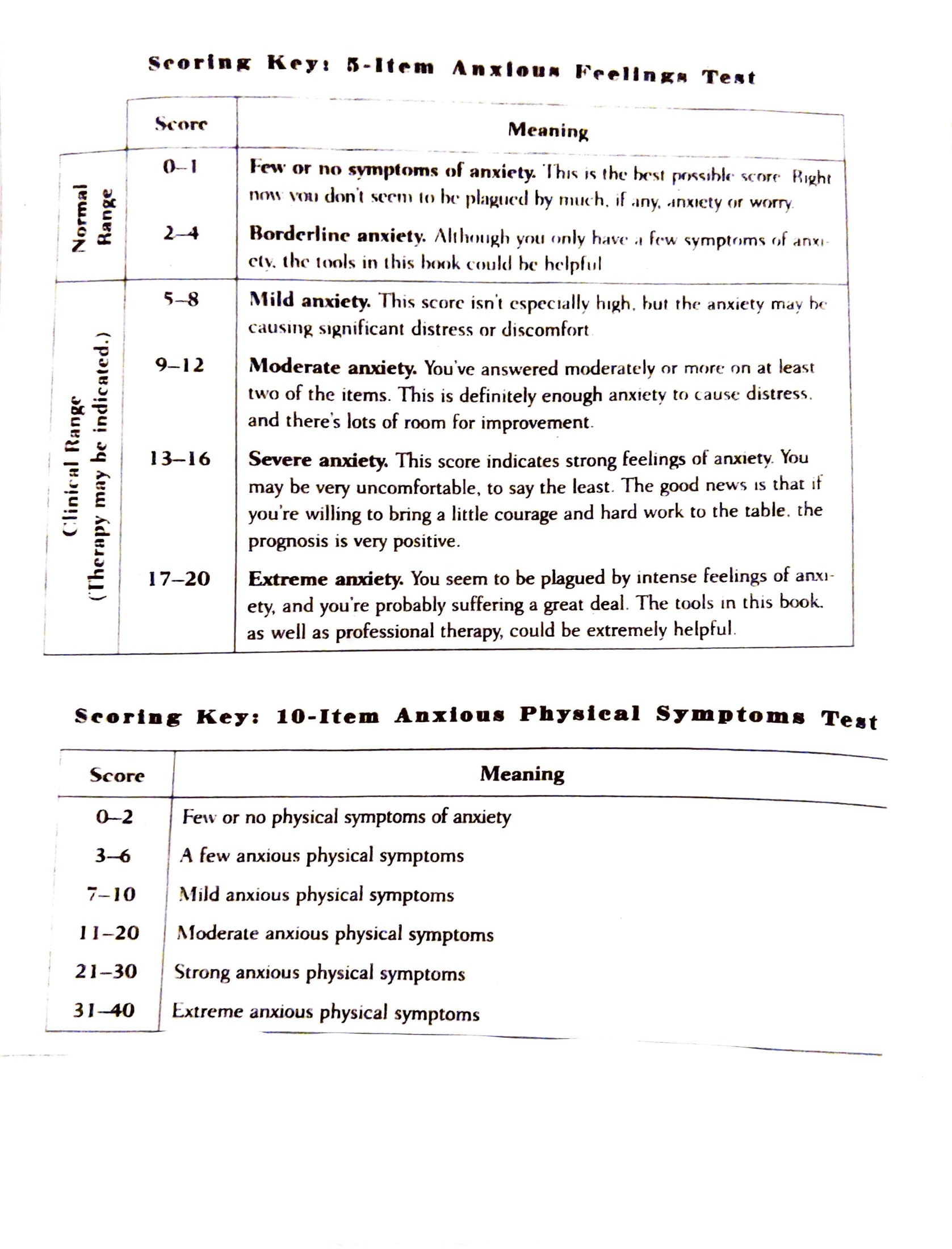
#3 Depression and Anxiety Tests


These tests are the same ones your doctor will give you to understand how you are doing mentally. They reflect a basic standard of care used by the medical profession in BC, Canada. They are based on the work of Dr. David Burns: a pioneer of Cognitive Behaviour Therapy.

I fill out my answers by reflecting on the past week and referring to my daily mood journal to remember my ups and downs.

#4 Chart the results.

I wanted to measure my progress, so I made this chart by blending some data from Dr. Burns together. It's not entirely accurate, but it helps me measure things over time. Over the years, I've made notes on my charts about things like medication change or significant events, and I have been able to measure the impact of these events on my health. 

#5 Journal 


I reflect on the past week through journaling. By this point, I usually have identified any struggles to be addressed.

#6 Make a plan 

Suppose I don't have the resources I need to address a problem. In that case, I make a plan: like contacting my doctor, reading a trusted resource on therapy techniques, planning a day of rest and self-care, or just facing up to a problematic situation that I've been avoiding so I can get it off my plate and move on.


So yep. This is what I've been doing for years. Having concrete steps to work through each Friday really helps me to focus. Hopefully, my experiences can help you too!

Also! Even if you don't work through all the steps, taking the time to fill out the depression/anxiety tests can give you a fair idea of how you're doing and if it's time to reach out for help. Many of us normalize our suffering and don't realize that constant misery doesn't HAVE to be our reality. Feeling upset by troubling events is normal. Living in a consistent state of anxiety and sadness isn't. Even in times of hardship and struggle, there is joy to be found. You can be happy again.

Tuesday, November 10, 2020

Hold Fast


    I finished this painting tonight. The paint is still wet and my eyes are roving across it, judging and delighting in the work at the same time. The process of painting this one was special to me... because I did it over a series of evenings after dinner, in the middle of our living room, dodging my kids and chatting with my husband.

It was fun because my whole family became invested in the work. My kids took to the symbolism easily and actually gave me helpful critique. My eight year old said things like: ‘Mom, you need more colour at the bottom of the tree. The top part is rich but the faded roots at the bottom make it look dead.’

They also were there to bolster me when I faltered and questioned my brush strokes. I have no formal training as an artist... and while I tell myself that being clumsy with a brush is fine, ‘it’s just a hobby anyways’, my perfectionist side kicks in and steals my joy by pointing out all my flaws. 

But the kids and my husband know that I’m weak, and when I complained, they parroted the words back to me that I have worked so hard to teach:

“You have a special style, one that is yours. It’s beautiful and unique.”

This painting is about love, about deep roots that hold fast through the storms of life. It’s about family.

One afternoon while painting, I looked over at my husband: lounging in his favorite chair and giggling his way through his TikTok feed.

My heart filled with love. “You do know that this painting is about you?" I said. "It’s about our love.”

He looked up in surprise. “Well, I know it NOW.”

😂 And I’d thought it was sooo obvious.

It’s fun to watch him look at it with new eyes, now that he understands.

And now that this painting is done, even though I held the brush, I’ll always remember it as the painting we all did together.