Showing posts with label Life in Balance. Show all posts

Sunday, January 26, 2025

Escape Burnout: Your Guide to a Restorative Care Day

You need a day off. I don't care how busy you are or how many tasks have piled up; in our fast-paced world, burnout is a real threat. But what if I told you that regular "restorative care" days could actually increase your productivity, improve your mood, and strengthen your relationships? It's time to enjoy a day off and be a better version of yourself. What's not to love?

Ideally, Restorative Care Days would happen for me every two weeks. In practice, I take them about once a month or when I feel a crash coming. Don't push through days of high anxiety and potential burnout. Hit the pause button and take a "sick day."

Restorative Care vs. Rest & Relaxation

For me, a Restorative Care Day is different from a day of rest/indulgence. Those days are also important, but restorative care involves intention and mindfulness. If you've been neglecting your rest, nutrition, and other fundamentals of self-care, you'll need more than a day to truly feel refreshed and ready for work again. A mental health care provider can also be a powerful ally to help clear your mind and lessen anxiety.

My Method for a Restorative Care Day

These steps are not necessarily done in order but mixed and matched throughout the day.

Body

Without the needs of my body sorted out, it's hard to find the resources to care for my mental health. I recommend not drinking alcohol the night before, going to bed on time, and waking up after you snag that magical 8 hours of sleep. Remember to incorporate movement, hydration, and nutrition throughout the day.

Glow Up:

Nothing feels like a new start more than a fresh look. It's easy to neglect self-care during the hibernating months of winter, but a shave and a trimmed haircut can really elevate your appearance and your mood. I cut my own short hair, but I know this isn't the norm for most. A hydrating hair mask might be a good substitute. I also love a good DIY spa session. I enjoy watching 90's sitcoms while doing a DIY manicure or pedicure. A nice mud mask and rich moisturizer for my poor winter skin is wonderful. My mood is always elevated when I feel clean and look sharp.

Mind

True rejuvenation goes beyond the physical. Dedicating time to "mind care" during a Restorative Care Day is essential.

Declutter Your Mind: 

I begin by writing down every "to-do" rattling in my head, big or small. This helps me externalize my thoughts and gain clarity. I even write down tasks that start with the phrase "think about…". For instance, "think about how I'm going to make ride-sharing work on Mondays" rather than "reschedule ride-sharing." Some tasks need a plan before they can be done. I've found that planning how to do a task is a task itself. I then ruthlessly cross off anything in the "wish I could" category, delegate what I can, and break big tasks into smaller, more manageable pieces.

Schedule with Intention: 

I grab my calendar, colorful markers, and stickers (to make it fun) and schedule 1-2 tasks per day for the next two weeks, prioritizing time-sensitive items. I also block off a future date for another Restorative Care Day – a reward for completing my tasks.

Soul

With my mind cleaned out, my body refreshed, and a cup of hot tea at my elbow, it's time to be vulnerable. It's time to feel my feelings.

Screens have made it way too easy to suppress uncomfortable feelings. However, not processing information communicated through our emotions causes mental and eventually physical damage. Today, rather than pushing emotions aside, you're going to lean into them. Put your phone down. Quiet your body and pay attention to any physical sensations, such as tightness in your chest, hands, or jaw. Emotions often express themselves as bodily sensations. Don't try to fix or judge your sensations and the feelings associated with them; observe them.

 Example:

   I notice tightness in my chest and in my jaw. I don't try to fix, understand, or judge; I feel it. Today, the tension I carry feels like sadness. I work to uncover the information my emotions are trying to communicate. This can be done through drawing, music, or journaling. Sometimes, I sit in stillness, meditating on the sensations of emotion and allowing flashes of memory to flicker across my mind's eye. 

I often sense deep weariness around this time. My response to depressive feelings can be the desire to sleep away the pain. But at the same time, it's important to be mindful of my physical needs. I'll usually honor this initial sensation by acknowledging that I've been using a lot of emotional, physical, and mental energy and go take a mid-day nap. 

Afterward, with a rested brain and another short bout of movement, hydration, and nutrition, I'm ready to feel deeply again. 

This time it is easier. I sink into the sadness that I feel, words and images fade in and out of focus in my mind's eye. Some rage comes up. And then tiredness. This time, however, I know the weariness is a block that keeps me from the truth. My physical needs are met. What am I feeling? At last, the information begins to flow. The information comes as a flash of mental images. 

I feel rejection. Someone disappointed me. Someone missed meeting my expectations. I showed up like Christmas, and there was nothing under the tree. The thoughts moving through my mind are speaking in a childlike syntax. Big me, grown-up me, knows how to comfort a child. I compliment myself and write out lists of validating thoughts. I give myself a hug. It's going to be fine. I am grown, I am competent.

Your journey will take you down many paths as varied as our experiences. Some information will be too complex to process on your own, and this is where a good listener/mental health professional can help. In lieu of these guides, I recommend mental wellness books as valuable resources (Amazon Affiliate links):


 * The Wisdom of Your Body by Hilary McBride

 * It's Not Always Depression by Hilary Jacobs Hendel

 * Family Ties that Bind by Dr. Ronald W Richardson 

 * Feeling Good by David Burns MD


The road leads to self-validation, and the goal is clarity of mind.

Connect and Give Back

As you end your time of attunement and reflection, it's important to reconnect. We are creatures of community and need connection to thrive. Beyond simple connection, care, and sacrifice are key acts for inner validation and confidence. Whether volunteering, spending time with loved ones, tending to plants, or simply observing nature, connecting with the world around us brings peace and fulfillment.

In a world of anxiety and burnout, self-care is essential. However, a day of indulgence, while restful, doesn't necessarily address the underlying causes of stress. By practicing Restorative Care, we give ourselves the resilience to thrive in a world that moves dizzyingly fast.

Thursday, January 4, 2024

Unleashing Creativity: Embracing Mental Lightness


            2024 is here. I’ve had a good break from my usual work and life stresses and feel light and joyful. I’ve also had space to reflect.

I am ambitious and driven. I’m a bit of a workaholic. I get an exhilarating high from checking the boxes, from a job well done. As someone who thrives on being occupied, the quest for constant productivity is a double-edged sword. The exhilarating highs of constant activity can lead to a subsequent drop in mental well-being, manifesting as a minor depressive episode when business subsides.

With a mind full of ‘to dos’,  I also struggle to be present with the ones I love. I get sick easily. When something in my life is out of balance, I ruminate obsessively.

My relentless drive for busyness can be traced back to control issues, probably rooted in perfectionism and a lack of trust. I often struggle to create and share my artwork because I am critical of every line I draw or paint. 

Which leads to my next point. Business and obsessive rumination over unfixable problems actually hinders creative growth. Creativity flourishes when unshackled from the fear of failure. Embracing creativity involves experimentation and learning, which can only be achieved by making room for chaos, uncertainty, and, yes, failure.

I know all this, but it’s time for my mind knowledge to settle into my heart. 

I want to be light. I want to be free from obsession, overwork and perfectionism. This year, I have resolved to learn how to slow down a bit and ‘let it go.’


I haven’t figured it all out (who has?), but I’ve got a few ideas. Here are my first steps on the path to mental lightness:


        1. Delegation. My kids are already experiencing the pleasure of taking on a few more chores around the house. I’m also practicing better communication with my husband. He often wants to help, but I’m not great at communicating my needs.

        2. Saying no, giving a joyful ‘yes.’ After years of screwing this up, I’m finally figuring out how to say no to things that I am ill-equipped for. I’m not great with crowds or screaming children, but I can happily mentor a young writer or help set up a community art gallery.

        3. Boundaries. Whatever I say yes to can’t compromise my sleep, nutrition, mindful time with the kids, relationship-building time with my spouse, or professional goals. The older I get, the less energy and physical ability I have. Boundaries help me to protect these precious resources.

        4. Friendship. This list already seems full. But it can’t be too full to maintain my support network of trusted friends. Good friends lift one another up and bear each other’s burdens. I’ve struggled in the past with a full calendar and an anxious, depressed mental state. It’s made me insular. Even during a busy week, there is always time for a work date, coffee date, zoom date or phone call. I’m joyfully ready to share and bear the burdens of life by reaching out once again.

        5. Mindfulness. This word has become so trendy that it makes me throw up a little in my mouth. I hear it trotted out as a solution to everything these days to the point where the mere mention of it seems insincere and lazy. And yet… I do know what it is to pray and meditate. I am a practicing Christian, and I know what it means to sink into a moment and release the list of endless unsolvable problems and upcoming tasks into the blessed ether. The discipline of sincere and deep spirituality can be through music, prayer, movement, meditation, unfiltered expression of art and many other ways. I’ve made some space in my life for these activities, personally and in community. I’m really looking forward to the calmness and clarity I know it brings.


Peace be with you.


Wednesday, September 21, 2022

A little bit of earth: Hope for a better future.

I'm standing outside of a pink stucco concrete building, making small talk with the other parents as we wait for our children to emerge from their activities. One woman mentions that she's recently moved from Australia, and the conversation turns to the differences betwen our southern and northern hemispheres. We start with talk of snow, and we all agree that last year's snowfall in Vancouver was unusual. 

The Australian woman then talks about the bush fires that threatened her home outside Brisbane in 2020, and I recall the terrible ice storms in 2014. Another parent brings up the impact of floods that submerged the communities of the Fraser Valley last year. We all muse and agree… it wasn't like this when we were kids. Not this bad… not this often. 

Photo by Renzo D'souza

There's a name for the melancholy we feel. It's called solastalgia. It's a feeling that's something like homesickness, but you haven't left home. It happens when you find your home environment is changing in ways that you feel are distressing.

I experience this often. The rivers of my childhood were so clear I could drink the water and catch minnows with my hands. The woods on public lands were dense and cool and filled with huckleberries and salal. Now, these places are disappearing and are hard to access. When I see a stream bed filled with trash or taste wildfire smoke in the air, I feel intense solastalgia.

But then, I look at my children and determine I will not lose hope. I decide to can still imagine a future of natural abundance. Something that will, sadly, be different. But it can still be beautiful.

If we all tend our little bit of green earth. 

Gardening has grounded me. I'm not exceptionally knowledgeable, but I pay attention. I visit my plants often; I watch them and make notes. I've learned what not to do. I tend my little bit of earth.

What do you tend to?

Let me explain. I plant the smallest seeds, add water and kitchen scraps, and reap a harvest far beyond what I deserve. Not only do I benefit from the crop, but the ripple effects of a flourishing garden have also created conversation, connection and gifts of abundance for my neighbours. My yard also hosts birds, squirrels, bees and butterflies. 

This process has taught me that living with the seasons, within the natural cycles of nature, causes me to thrive. I can also clearly see that  when we lives in a way that is antagonistic to the natural systems of this earth, our lives are jeopardized. 

Loving the environment and advocating for it is kind of my thing. It's the thing I tend to.

Artificial fertilizers, over-paving, and poor water management have disastrous and personal effects. These practices, along with many others, have directly led to drought, food insecurity, home-threatening flooding, heat islands and increased poor mental health.

Photo by Cristi Ursea

It's important to note that many of the harmful environmental practices in our communities are within our ability to influence change. Some of the most significant and immediate transformations occur at the municipal level.

City infrastructure is approved by town hall, and you the opportunity to advocate for initially higher-cost infrastructure that pays dividends of capital and quality of life for generations and saves lives. 

Consider writing your councillors for solutions such as porous pavement, rain gardens, centralized recycling locations, safe biking and walking routes, green spaces to combat extreme heat, well-insulated homes and rooftop gardens. In my own small way I advocate for municipal environmental reviews, impact studies, and indigenous consultation to be implemented before significant developments are considered. I often witness environmental and indigenous parties scramble to retroactively mediate the disastrous ecological impacts of projects they only discover after the approval process is well underway.

And cities don't even win from this approach! By moving fast and taking cash, near-future impacts of poor eco-urban planning include major lawsuits and it is taxpayers who have to pay. (https://www.cbc.ca/news/canada/british-columbia/b-c-reaches-65m-funding-deal-with-first-nation-after-supreme-court-ruling-1.6204008)

Soooo yep. I'm passionate. I've expanded my care of the small garden beneath my feet and grown this care into my broader community. I consider this passion to be my personal bit of earth  But as you know, not everyone is blessed with a physical garden. Also, the ills of this world are so much greater than simply environmental. And this thought makes me wonder:

what's your little bit of earth? What is the the thing you care so much about?

Is it human rights, animal welfare, or elder care? Do you feed the soul through baking or do you feed the world through investments and thoughtful donations? Are you a parent, striving to raise our little ones with the hope, imagination, and resiliency to thrive in a complex future? Are you passionate about mental and physical health care?

What is the bit of earth that you tend?

I've been posting many photos on social media chronicling my garden harvest this season, but the truth is, I would NEVER require anyone to try and mimic this approach to life if it's not your passion. Without joy, multiple hours a day weeding and watering can be soul-crushing.

Nor do I demand you become an eco warrior, not if it drains you empty and leaves you laying on the couch. Rather, I'd like to encourage you to find your own passion: your own bit of earth to tend. I encourage you to give to the world from your unique place of strength, joy, and comfort. Not out of compulsion but from passion.Tend your garden well. We need you. Together, the future can still be beautiful.

Hold Fast by Charity Gosling


Friday, March 4, 2022

Hacking the Hustle: Less is More

Photo by Faye Cornish @fcornish

Relax.

It’s not how many hours you have to hustle, it’s the quality of those hours. For me, one alert, inspired, engaged hour produces more, higher quality content than four tired, forced hours.

What I’m saying is. Go do that thing that makes you feel good! Right now. It’s okay.

And exercise.

Then, take care of your mental health. By this, I mean unplug, pray, meditate, journal. Lay in the grass and look for shapes in the clouds.

Also… spend some time investing in the meaningful relationships around you: play, engage, listen, vent, unwind.

Do all of these things… and THEN create.

I’m preaching to myself here. Because, while I know these things in theory, there is so much guilt around not ‘being productive’ every frigging minute of the day that it’s realllly hard for me to truly relax.

But the problem is when my life is over-scheduled, my brain and body shut down. For me, the harder I try, the less I do. I’m seriously starting to doubt the ‘hustle’ culture messages that demand that we send emails on the toilet and learn Spanish while washing dishes. 

But this leads to burnout and it murders creative production.

Hacking the hustle is also about timing. Because I work from home, I can move tasks around to do my creative work whenever I have the most focus and energy. I’ll save the dishes and the laundry for the end of the day after my mental resources are used up. 

Also.

When it comes to deadlines… Plan out how long your project will take and then triple that estimate. This leaves space for family and global emergencies, which WILL happen. Then, rather than apologizing to clients and burning out with guilt, you actually have the opportunity to finish early. 

Again, I’m preaching to the choir.

My plan was to write a blog post on how I break down my months, weeks, and days into small obtainable goals to build momentum and bring in income as a working artist and writer. But the thing is… there are a million resources out there for that sort of thing. After years of trying, I’m starting to figure out the obvious: overscheduling and overstressing simply don’t work. Yes, stating goals are important, but I’m finding that removing the ‘push’ from my life and working one or two happy, creative hours is so much more fulfilling and productive than forcing the hustle.

Again. If you really are determined to produce creative work, don’t compromise regarding sleep, health, self-care, and family. Even if these things feel like they take too much time, put them first and watch your ‘productivity’ actually increase while investing fewer hours.

Your brain will thank you,

With love,

Charity.

PS

And cat naps are good too. Lots of little naps… :)


Saturday, October 16, 2021

A Different Kind of Hurt: The Physical Pain of Mental Injury

https://unsplash.com/@joshuafuller

 A friend once shared that her youngest son was born with a painful yet invisible neurological condition. For years the young boy struggled with excruciating pain. Still, he lacked the language and understanding to communicate what was wrong because the pain was normal for him. It wasn't until the young man reached his early 20s that he gained the insight and language to share his experience and to finally receive treatment.

This story reminded me of my experience of mental illness. I lived with depression and anxiety after the birth of my second child. My brain hurt, but it was unlike any type of pain I'd ever known. I had no similar experience to draw on. I lacked the language to say what was happening. It made it nearly impossible for me to verbalize to myself what was wrong, much less express it to others.

But that didn't mean that my pain wasn't real.

I am so grateful that our culture is beginning to give language and recognition to the pain of mental illness. After a journey of years with metal injury, I now understand that my pain is real because my brain is real. When you bang your shin, you don't need to look to know something is wrong. When something triggers my anxiety, I am now experienced enough to know "'ouch' that hurt! I need to take care of that so I can heal".

But it's still hard to precisely describe the sensation, mainly because, short of using an MRI machine, you can't see the damage and we don’t seem to have the language to communicate exactly what is going on.

Still, I want to try… because my mental pain is a physical sensation that I am learning to identify. The closest way I can describe it is it feels like an aching bruise. I feel it and know that something inside my head just took damage. Some parts of my brain grow foggy, and other parts start to over-fire. Panicking neurons lead to secondary sensations like nausea and a pounding pulse. I may start to blackout. In extreme cases, my nose might even begin to bleed.

I think of medication for mental illness as a supportive cast to protect the damaged areas of my brain and of therapy as rehab to strengthen and protect those areas. With these supports, I can calm and regulate my nervous system when something 'bangs' me mentally. Even better, I have learned that I can protect myself BEFORE mental injury occurs with things like exercise, nutrition, sleep, and journaling.

Do you know what else? Just like no one escapes external injuries on this journey of life, I doubt that any of us totally escape mental injury. A traumatic situation bruises your mind just like a dropped dishwasher door can knock your shins. Some wounds heal quickly. Some can be ignored. Some leave scars that inhibit your original cognitive function. Like external ailments, some mental injuries can heal and others can be even cured. Some mental ailments may presently lack a cure, but the symptoms can, happily, be managed.

Addressing mental pain and seeking out ways to heal just makes sense. We would never demand that someone continue to walk on a broken leg! Would you call an athlete rehabbing an injury weak? Or would you admire the grit it takes to return to health?

If you know what I’m talking about, I want to reassure you: you're not ‘crazy’. The pain in your brain is a symptom of a mental injury. That drowning feeling that cripples you and presses you into the bed? That's not you; it's your injury. There is help. It can get better. 

You are not alone.

Thanks to Dan Meyers @dmey503 for making this photo available freely on Unsplash 🎁


Sunday, October 10, 2021

Dreamscapes

https://unsplash.com/photos/sJGvoX_eVhw?utm_source=unsplash&utm_medium=referral&utm_content=creditShareLink


In my dreams, my family owns a house. The house stands upon the top of a grassy hill like a great wooden ship cresting a wave. The sea is the dreary and complex city pressing up against the hill on all sides, held at bay by a great tall white wall.

This is the home that no one else wanted. When we found it, it had been the ancient squat of a mad hoarder, with piles of garbage up to our necks in every room.

But we loved it. We bought it and began to clean it. As we cleaned, we discovered that beneath the garbage was a vast and dazzling collection of fantastic items from across the entire world. Each room on the second and third floors of this house is dedicated to a different collection.

The home in my dreams is full of wonders. Everything is made of polished gleaming wood. The bay windows in the dining room take the space of an entire wall and somehow always look out onto an endless misty moor. There is always something to repair in this home, and there is always another nook to discover. Usually, these nooks are small sunny spots filled with pillows and books.

The basement of the house is frightening and fascinating. It is the only place in the home that defies order, no matter how hard my lucid dreaming self tries to repair and clear it. The basement is always dimly lit with a maze of ancient clothes from across time hanging on racks. The clothes are beautiful and delicate, and yet they fit poorly and always smell bad. The clothes are the happiest staying where they are.

The basement floor is wet. Beyond the clothes, there is a mountain of rusted and tangled sports equipment, like a hedge of thorns.

If you can make it past the broken sports equipment, you come to a place where you see that the home's foundation is cracked. Above the cracked foundation, there is a large hole rotten through the wooden wall. This hole refuses to be repaired, no matter how I try, and it fills me with unease. I must face the fact that one day my dreams will crumble, and the house will collapse. And maybe we were fools to have bought this home at all.

The hole weeps like an open wound, and it reminds me of the heel of Achilles. Wild dogs, spiders, and raccoons come into the basement through the hole and make nests in the ancient clothes. 

I flee back up to the dining room and try not to think of the hole.

There is a secret elevator in the house. It took some time to find it, and it doesn't always work. But if you can get over the fear of cramped spaces and the possibility that the elevator might get stuck and trap you forever between the house's walls, you can take the elevator to the very secret top floor. 

When you step out of the elevator, you see that half of the top floor opens to a wild alpine rooftop garden. The other half of the secret top floor is cool, white, and metallic. There is a futuristic command interface inside of an egg-shaped room. This room looks like the bridge of a battleship with a large screen and a wide control panel. This is where the greatest secret lies. My wonderful house on the hill doesn't just look like a ship; it IS a ship, controlled by science and magic and a benevolent AI personality.

All you have to do is say the word, and the city around you grows liquid. The house turns into a mighty ship and sails through the world's landscapes as if they were water. You can go anywhere, have any adventure and sometimes even lift up off the earth and sail through the sunrise.

I return to this magical home many nights while I sleep, and the dream builds and shifts. There is a trapdoor leading to a secret underground world. There is a train that circles the base and never lets you leave. There is a room where you can learn magic as long as you never tell anyone else where it is. And gargles. There are gargoyles on the chimney tops...

But I have spent too long in bed. There are chores to be done and people to greet.


"The woods are lovely, dark and deep,   

But I have promises to keep,   

And miles to go before I sleep..."


Sweet dreams.


:)


Monday, May 24, 2021

The Sixth Sense


 It’s been an emotional month for me. The kids have had their share of problems at school, and my family has been plagued with health issues. There’s also been the possibility of a job change and a potential move, which makes everything feel unsettled.

Whenever I plant a seed in my garden, I wonder if I will get to watch it bear fruit or if we will move. Honestly, I don’t know.

Happily, I’ve been reminded that I have a superpower to help me navigate uncertainty, burnout, and relationship conflict. You have it too.

It’s our emotions.

For generations, we’ve been taught to ignore and repress our emotions. Another school of thought suggests that giving in to your emotions by wild outbursts of expression is ‘healthy.’ I want to challenge you to think about your emotions differently. They are not bad or good. They are not to be repressed, nor do we have to surrender our will to emotional impulses. Instead, emotions are simply a source of information about our environment and our relationship to that environment. 

I think of my feelings as a sixth sense, a way of gathering information that is often overlooked and undervalued. Ignoring my emotions is kind of like putting a piece of electrical tape over the ‘check engine light’ in my car and continuing to drive.

When I feel a strong emotional response to something, it’s essential to take the car to the shop and take a peek under the hood. I do this by first doing a body scan. Are my physical needs being met? Am I getting enough sleep, balanced nutrition, exercise? Have I done anything recently to throw my hormones off balance (medications, supplements)? What about withdrawal/ dependency symptoms (caffeine, alcohol)?


Next, I make a list. I write down absolutely every unfinished task weighing on my mind. Once my mind is free from the burden of trying to recall a lengthy list of ‘ought to-dos', I place it aside. I might schedule a time to look at this list later by making a note on the calendar. When the time is right, I will organize my tasks according to importance, delegate what I can, and trash what really doesn’t matter. But now is not the time. I put the list out of sight and release it from my mind.

Now, I move outward. Sometimes, I know where the source of my strong emotional response lies, but sometimes it takes a little digging. Journaling helps with this process. I often find a difference between what I think I ‘should’ feel about a situation and what I actually feel.

Anger lets me know a personal boundary has been violated. Unease can expose the fact that a situation feels unsafe. It goes on… but honesty is critical. I swear and break the pencil lead on the paper. I have placed myself in a quiet, safe space. I can write how I really feel.

Once the problem is exposed, I brainstorm a way forward. What needs to change? What boundary needs to be expressed? I move forward in the direction of peace, lightness, and release. I chose to act, not in a manner controlled by my emotions but in a way that honours them. I will state what is needed with empathy, compassion, and a clear, firm understanding of my boundaries.

I am not a therapist, but I am a human. I think and feel, and like all of us, I get banged up on this walk of life. This is a process that I have developed over several years of practice with Cognitive Behaviour Therapy. Accessing the information passed to me through my emotions gives me a deeper understanding of myself and the world I live in. It allows me to live in a way that feels more balanced, peaceful, and productive.

A note about productivity. I often fight the need to decipher my emotions because I usually measure my value by how much I produce. I don’t want to stop and reflect. I want to check that next to-do off the list. A time of reflection feels like being lazy.

But the truth is the opposite. If I really want to get through that list of things I'd like to do… and do them well, I MUST stop and ‘check the engine.’ I can spend three days pushing my miserable self beyond the point of burnout to do the same amount of work a happy, well-adjusted me can accomplish in an afternoon.. ;) Time really is relative! 

Not that productivity should be the way we measure worth, but especially as someone who creates regular online content, this measure of worth is something I struggle with. So understanding that self-care actually INCREASES my productivity motivates me to take the time to keep the engine oiled. Listening to the information given to me via my emotions makes me a better lover, parent, creative etc. 

And hopefully… someday soon, I will internalize the truth that we are all inherently worthy of love and care. To exist is to be worthy of love. I am loved; I am worthy of care. I deserve health, security and peace of mind... simply because I am.

And so do you.

Image by <a href="https://pixabay.com/users/stocksnap-894430/?utm_source=link-attribution&amp;utm_medium=referral&amp;utm_campaign=image&amp;utm_content=2608145">StockSnap</a> from <a href="https://pixabay.com/?utm_source=link-attribution&amp;utm_medium=referral&amp;utm_campaign=image&amp;utm_content=2608145">Pixabay</a>


Friday, February 26, 2021

Howling at the Moon (crazy sleep cycles)

 I'm writing this blog at 11:46 pm. And it's all Farley Mowatt's fault.

One of my favourite books as a child was "Never Cry Wolf" by Farley Mowatt. It's the story of a naturalist living among a pack of Arctic wolves. It's a haunting and beautifully written semi-autobiographical novel. If you've never read it, please do!

And it had an unusual and lasting effect on my young brain.

Did it give me a lifelong passion for wolves? Not really.

Photo by Thomas Bonometti on Unsplash
Did it inspire me to become a naturalist? Sort of. I often advocate for environmental issues through writing.

Did it teach me that I can use urine to mark my campsite boundaries in the backcountry? Maybe.😝 (I have never tried, but it seemed like a trick that might be useful one day.) 

What this book did do was inspire me to try and sleep like a wolf.

In the book, the author describes himself adopting the sleeping patterns of the wolves he is studying by sleeping in short naps around the clock. I think I was struggling with insomnia at the time, and somehow, to my young brain, this sleeping pattern made perfect sense.

And thus started sleeping patterns that I still can't shake. I stay up late, wake up early and nap a lot. Wherever and whenever. My naps can be ten minutes, they can be two hours. Regardless of the circumstance, this pattern has remained consistent since highschool.

I've slept on golf courses, beaches, park benches, private meadows, and in the tub. In the car, on couches, and on hard plastic chairs. I sleep on coffee breaks, lunch breaks, study periods and in the Costco parking lot before a big shop.

Basically, I sleep like a wolf: awake and asleep for short periods of time around the clock. I've tried to change this many times, but as my husband pointed out, I still get eight hours of sleep! And get everything done, so why fight it? Maybe it's mental, maybe it's a sleeping disorder, maybe it's biology. Personally, I blame Farley.

<span>Photo by <a href="https://unsplash.com/@aronvisuals?utm_source=unsplash&amp;utm_medium=referral&amp;utm_content=creditCopyText">Aron Visuals</a> on <a href="https://unsplash.com/s/photos/wolf?utm_source=unsplash&amp;utm_medium=referral&amp;utm_content=creditCopyText">Unsplash</a></span>
Photo by Aron Visuals on Unsplash

🐺


Tuesday, January 12, 2021

Dryuary: Drying out and levelling up


Sometime halfway through November, I realized I was drinking more than I wanted to. Savouring an occasional glass of wine had turned into drinking nearly an entire bottle to feel the same sort of heady buzz. My alcohol tolerance had gone way up, and my standards for the type of wine I was willing to consume had gone way down. I could also see that my need for wine to relax at night and the hangovers I had in the morning were encroaching on the quality of time I could give to my family.


I tried cutting back on my own, but a few slip-ups left me frustrated and regretful. I journaled, I struggled; finally, I reached out. I found accountability vital to weaning me off alcohol, but it's also the most challenging part. There is such a stigma around admitting that you are regularly consuming more alcohol than you should. It's a shameful and taboo subject.


I find this attitude a little strange. I mean, a large majority of us drink regularly in some form or another, so it follows that many of us also find ourselves somewhere on the slippery slope of addiction to alcohol. The biggest revelation that I've had in the last month is that the saying "alcohol and drugs" is wrong. Alcohol is a drug. Full stop.


Now, I know this blog is supposed to be about creativity, but for me, the practice of living a creative life includes mental and physical wholeness. My love for good wine was out of balance; to live a full and creative life, I need to regain control.


Many of my thoughts around this subject are inspired by the book "The Naked Mind" by Anne Grace. Like me, if you want to, at least, moderate your drinking, I highly recommend her work. I find it especially effective as an audiobook.


Nicotine is a drug; caffeine is a drug. Our bodies naturally build tolerances to these substances, and we need to consume more to have the same desired effect. We also develop dependencies on these drugs, making it hard and painful to stop using them even when the drug no longer gives us the buzz we initially felt, even though we now consume our drug of choice simply to feel normal. 


Alcohol is a drug. There's no clear line between "them"(alcoholics) and us. We're all consuming the same substance, and we're all on the same path. If you drink regularly, it's pretty much inevitable that you will someday develop a dependence on the drug called alcohol and encounter its harmful side effects. As so many of us drink, I'm writing this blog post because I'm sure many of you have felt the same as I have;


That just maybe, you're drinking too much.


I didn't like what I was doing back in December. The irony is, the wine really flows around the holiday season. In an effort to cut back, I gifted my neighbour with a bottle I'd purchased to drink on Christmas, only to discover a bottle in the gift bag she'd given me in return. But I had some help. I'd connected with a friend who also wanted to take a break from drinking, and the accountability stopped me from pouring a glass with dinner. Instead, I indulged in hot chocolate with foamy cream, mini marshmallows and a dash of cinnamon.


It took me about ten days before I felt the physical cravings for alcohol subside. It was absolutely a battle, and honestly, I threw my calorie diet out the window and used sugar as a substitute to help manage my cravings. It was the holidays and boy, did I eat a lot of chocolate and candy!


Once the physical cravings subsided, the mental ones continued. My mental wish for alcohol forced me to examine what made me want to consume in the first place. We often say that we use alcohol to relax, but now I asked why. Relax from what? And how can I make that stressful situation better rather than reaching for a drug to numb my feelings about it?


For me, this involved a sit-down talk with my two little precious girls. I told them, nicely, that when mom is trying to sear a pot-roast, it is a very bad time to start spin dancing next to the stove and bickering about who gets to build a googly-eyed monster with the last fuzzy pink pipe-cleaner.


Among other things. :)


So yeah, establishing clear boundaries in my life has helped me lessen the number of triggering stressors that gave me the mental urge to reach for a glass of wine.


I remember the first time since choosing to abstain that I felt mentally overwhelmed, and I wanted a glass of wine. I was about to grab the bottle when I thought, 'this is a good time to see what happens without it.' I won't lie, that night was a hard one, but it also forced me to do the work to address the problem I was trying to run from. Wine doesn't solve problems; it just stops you from dealing with them. In the morning, your situation is still there, and you've got a hangover.


So instead of drinking, I choose to deal. :)


And remember that bottle of wine from my neighbour? I still have it. I actually like the fact that I have alcohol available. It means that I could drink wine, but I choose not to.


Another reason that I was drinking was because of physical pain. Typing over a keyboard, crafting, and painting all give me great joy, but they also all put incredible strain on my neck. As a reward for abstaining from wine, I am using that money towards a monthly massage instead. :) 


If you are interested in drying out for the short or long term, January is an excellent time to start. Many communities now recognize this first month of the year as 'Dryuary,' giving you a built-in support system towards regaining control. Just google it. :) It's a unique and affirmative movement, and I'm so excited to be participating this year.


However, please consider your level of physical addiction. Going completely cold-turkey on your own may not be safe for you if you have a high level of dependance. That's when your doctor may need to become involved. Be safe, be honest, and know you are not even close to being alone in your struggle!


To be honest, I'm not ready to give up alcohol altogether. I want to be drinking for the right reasons, and I want to be in control of alcohol, not the other way around. Ideally, I'd like to return to the occasional glass of wine on special occasions. Realistically, I know this may not be possible. Physical addiction to a drug changes the structure of our brains. I may find that I now permanently struggle to moderate my intake. It's something to watch out for!


In the meantime, I'm currently in the market for some delicious gourmet hot chocolate. Any ideas?


Monday, December 28, 2020

Totem Reveal

I have been doing a lot of soulsearching lately. I'm trying to understand who I want to be as an artist. The plan is to gain a clear vision of what I'd like to communicate through my art in this season of my life. I will then take that vision and channel it into my projects for 2021. I've got some fantastic ideas! If you're interested in getting the inside scoop, I'd be honoured to have you sign up for my monthly newsletter

If you are already a subscriber, thank you so much! Your love and support mean the world to me, and guess what? This post will be review for you. Can I offer you an alternative? My poor YouTube songwriting channel REALLY needs some sweet love. Click here to listen to a song or two and tell me what you think. 

So,

my soulsearching ended up looking like this:


In summary, I've discovered that I create art (use symbolism) because I want to encourage healing by restoring relationships.

Pretty much everything else grows out of this central thought. I have this idea that first, we need to heal the relationship we have with ourselves. 'Healing within' means finding wholeness and balance between our physical, mental, and spiritual needs. I have found that when I make my personal health a priority in all these areas, I have more to give to those around me.

So that leads me to my next thought: the healing of relationships within society. It starts with our close friends and family. We need to extend the grace we give ourselves to others. In other words: the more consciously accepting I am of my imperfections, the more I'm able to cut those around me a little slack (hint: laughter is key). And guess what? A healthy support system that gives and receives grace provides us with the strength to reach out to our communities. In my head, I see a picture of ripples of grace, expanding outward in widening circles: like when a rock is thrown into a pond.

Finally, as we heal ourselves and recognize the humanity that we all share, we also need to understand that human beings exist within a larger natural ecosystem. We are a part of this world. Nature and her systems aren't something that exists 'out there' beyond the comfort of our homes and cities. We are a part of the natural world, whether we recognize it or not. Unfortunately, our relationship with nature is, more often than not, destructive.

We need to reintegrate into this world's ecosystem by accepting our place within it (not lording over it). I would love to see a city with porous concrete and rooftop gardens. I wish to see human civilization embrace the filtering and recycling systems of nature, rather than destroying these systems and then discovering to our shock that our environment is becoming toxic.

I think I saw a meme once that said: imagine if trees gave free wifi rather than just clean air: there'd be a forest in every yard.


Thanks for sticking with me this far! You're a true friend! I know it's a lot. Welcome to the busy chambers of my brain!

Okay. Check this out.


It's a model of the universe presented by Johannes Kepler, an astronomer from the 17th century before there were proper astronomers. 

Basically, Kepler took the mystical study of the heavens at the time and added, well, math. He built upon the ideas of that heretical crackpot Galileo (the guy that dared to consider that the earth might NOT be the center of the universe) and improved on it. Kepler used mathematical equations to describe the movement of planets around the sun. In doing so, he set the groundwork for Newton's description of gravity. 

Consider all of this against a backdrop of Europe smack in the middle of the Dark Ages: warring fiefdoms, starvation, and smallpox everywhere! And yet, Kepler's ideas set the foundation for the "Age of Reason" about 100 years before it bloomed and bore fruit.

It's a story that gives me hope. I won't deny that our world can look bleak right now, but I am encouraged by the idea that today's creativity might sow seeds for a new age of reason tomorrow. This concept is why Kepler's model has become the inspiration for my new totem/logo.


My logo speaks to a few ideas at once. It represents both interconnectivity and innovation. It touches the past and inspires me to look to the future. Kepler was driven by a sense of childlike wonder that he carried with him throughout his entire life. It's a gift I'd like to give through my art.

With love,

Charity


Friday, December 18, 2020

It's Worth it to be Weird


A good friend of mine, Ingrid, recently wrote me the sweetest letter. She talked about how she's been teaching a class in systems and administration, and it hasn't been a comfortable experience. She told me how vulnerable she felt, speaking on something she is so passionate about. Ingrid's feelings of inadequacy and the fear of being judged make her wonder if it's even worth it to be vulnerable and show people her true self.

Now, Ingrid is brilliant and strong-willed. She refuses to wallow in self-pity and always bootstraps herself out of bed and back into her busy, productive life. And she knows the answer to her own question: of course it's worth it to be vulnerable!

Ingrid's letter gave me so much joy. Systems and administration are NOT natural giftings of mine. However, I have learned that they are the 'yin' to my creative 'yang.' Without a system to help me focus and stay on track from one day to the next, I don't think I would be able to get anything done! Much less eat properly, spend meaningful time with my loved ones, etc. I'm in awe of Ingrid's natural bend in this area, and I would TOTALLY take her course!

Her letter also made me laugh. Despite our different aptitudes, her feelings are all too familiar. I remember a moment when, as a teenager, I understood there was something different inside of me. I also knew it had something vaguely to do with creativity. I told myself, 'this part of me is weird. I will lose my friends if they know. I must push it down and hide it.

And the thing is, maybe on some level teenage me was right. I was in survival mode. I needed to blend in, be cool. My home life was rough; my friends meant everything. I don't blame that younger version of me, but if I could talk to her now, I would say:

That part of you inside: that bit that is different and weird: that is the best part of you. It's the part that holds your superpower. If you dare to show it, your weirdness will shine, light up the dark places of this world and be exactly the encouragement that someone else needs.

And you're right; not everyone will love your weirdness. A few may be cruel. But the mean ones are in the minority. They are the chaff that blows away in the wind. Let go of your hurt. The ones that are not in love with what you have to share will go away.

What remains is a circle of supporters who are edified and passionate about what you dare to share. Sharing and finding acceptance, in turn, will give you a deep sense of fulfillment.

It's worth it. The fight to be honest and vulnerable; the battle to conquer self-doubt, and the crippling fear of rejection; it's all worth it. 

At least, that's what I would say to my younger me.

And this older version of me.

And you.

Friday, November 13, 2020

Feelings Friday: An essential habit for mental health

I've mentioned this before. Every Friday, I take some time, usually in the morning, to run through a mental-health check-in. It's something that I've done consistently for two years now, and, for me, this check-in is an essential building block for healthy goals/relationships/quality of life. 

Often, I am not motivated enough to practise this discipline for myself. However, I've come to understand that taking care of my brain is essential for my family's health and happiness. The day that I understood how my poor mental health was hurting my kids was the day I committed to getting better: for them.

Being strong mentally involves many different pieces. Feelings Friday is just one, but I thought I would share a bit of my method with you in hopes it may give you some direction and insight. So here it goes.

#1 Fast, visual journaling of what happens every day.

I use the Daylio app to create a record of events during my day and my mood. I fill it out every night at around 9 pm, and the exercise usually takes under a minute. A single sentence in a daily journal would be comparable. It can be hard to remember everything that happened over a week, and a fast daily record can help.

#2 Feelings Friday

This scheduled event is written on the calendar. It takes priority over anything else that I may want to get done. It is not something to be done 'between' or in your 'free time.' It is the thing that you are doing this morning. I make space for Feelings Friday by taking a break from my morning 20-minute workout. I trade my physical exercise for mental. Both are equally important.

#3 Depression and Anxiety Tests


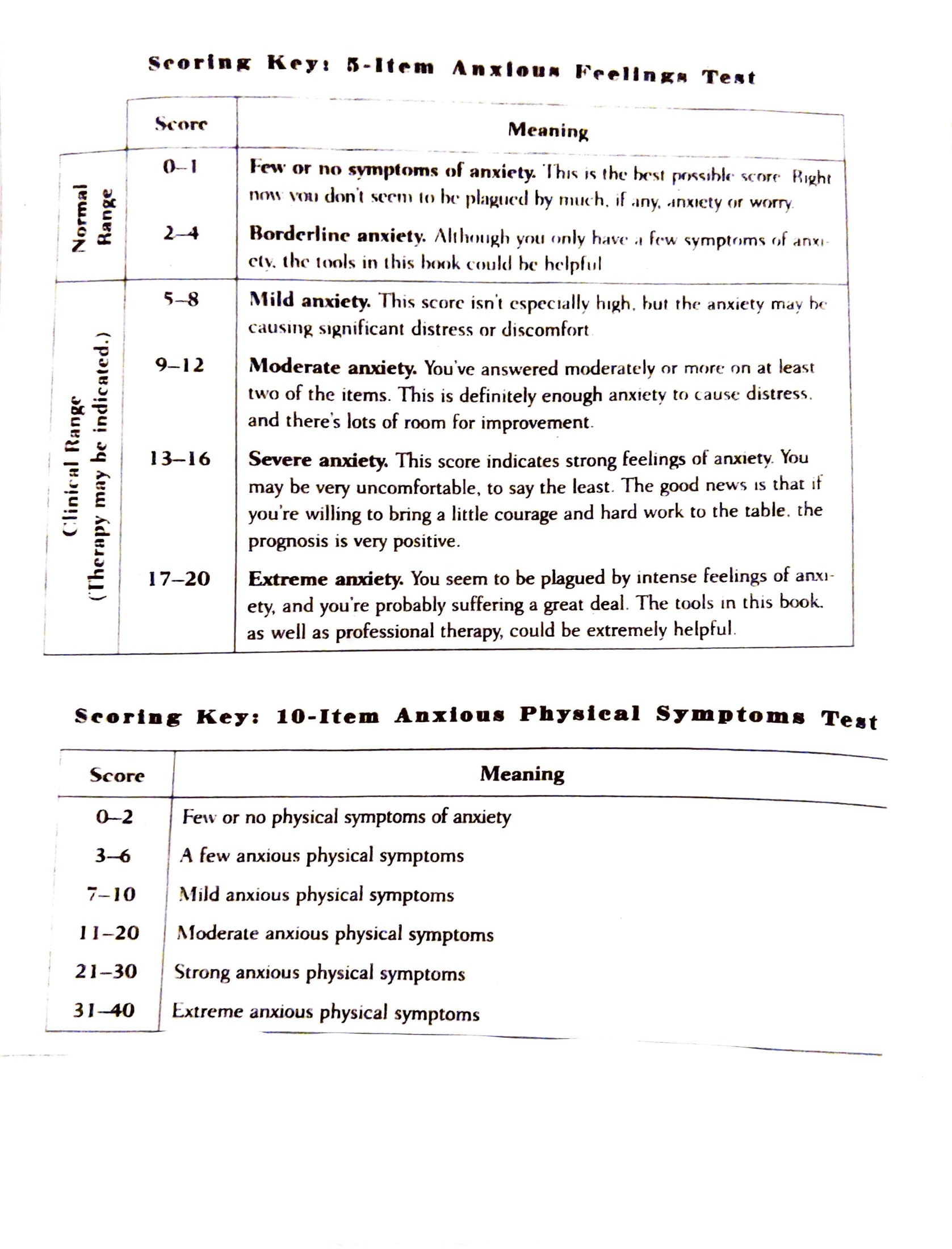
These tests are the same ones your doctor will give you to understand how you are doing mentally. They reflect a basic standard of care used by the medical profession in BC, Canada. They are based on the work of Dr. David Burns: a pioneer of Cognitive Behaviour Therapy.

I fill out my answers by reflecting on the past week and referring to my daily mood journal to remember my ups and downs.

#4 Chart the results.

I wanted to measure my progress, so I made this chart by blending some data from Dr. Burns together. It's not entirely accurate, but it helps me measure things over time. Over the years, I've made notes on my charts about things like medication change or significant events, and I have been able to measure the impact of these events on my health. 

#5 Journal 


I reflect on the past week through journaling. By this point, I usually have identified any struggles to be addressed.

#6 Make a plan 

Suppose I don't have the resources I need to address a problem. In that case, I make a plan: like contacting my doctor, reading a trusted resource on therapy techniques, planning a day of rest and self-care, or just facing up to a problematic situation that I've been avoiding so I can get it off my plate and move on.


So yep. This is what I've been doing for years. Having concrete steps to work through each Friday really helps me to focus. Hopefully, my experiences can help you too!

Also! Even if you don't work through all the steps, taking the time to fill out the depression/anxiety tests can give you a fair idea of how you're doing and if it's time to reach out for help. Many of us normalize our suffering and don't realize that constant misery doesn't HAVE to be our reality. Feeling upset by troubling events is normal. Living in a consistent state of anxiety and sadness isn't. Even in times of hardship and struggle, there is joy to be found. You can be happy again.

Saturday, August 15, 2020

Something Has Got to Give

Five months.

Five months since my kids were pulled from school and my world as I knew it disappeared. I mourned every activity erased from the calendar. I had spent the first part of the year proudly building my career as a contract writer when suddenly my kids were home all day, and my small-business clients vanished.

Instead, housework tripled, and I was supposed to teach math in french (my kids are in an immersion program). Writing... well... I started a garden instead. It got me (and the kids) outside.

Jump ahead five months.

I'm on the couch, reviewing my journal entries:

Depression and anxiety can become debilitating for me. Because of this, I keep meticulous notes. I journal about my mood, thoughts, physical well-being and activities every day.

Every Friday, I go a bit more in-depth, reviewing my short-hand notes and recording my anxiety and depression levels on a chart... I know, I'm kind of a huge nerd. I even have different coloured pens to record the different types of symptoms. :P

I review my notes and notice that I have not had a single anxiety attack since April 17, the same week we went into lockdown. 

I dig a little deeper. I re-read my notes and journal entries. I’m surprised to realize that my contract writing, which brought me money and a sense of worth, had been making me miserable. I’m much happier now... and I’ve got the charts to prove it. 

I'm not sure what this means. It's an insight that I'm turning about in my brain, like an oyster wearing on a bit of sand.

Is it me that needs to change?

Or is it the nature of the work that needs to be adjusted?

Something has got to give.

I'm just not quite sure what.

I’ll let you know when I do

:P


Tuesday, January 14, 2020

How I keep my New Year’s Resolutions (Hint, I don’t)


Step one: Focus. Define what I want. Make it specific. Create long and short term goals. I outline the steps I need to get there. I kick distractions to the curb.

Step Two: Make a plan. To make it fun I use a giant calendar and lots of stickers. I write it down and schedule time to work on my goals.

Step Three: Get knocked on my a**. 😂Circumstances change, kids get sick. Creative projects I wanted to focus on get shoved aside for a job that makes money. I wear a pair of tall sexy heels and trip, wrenching my knee. I gain two pounds. :P

Step Four: Change my heels for sweats and a knee brace. Mope for a day.

Step Five: Reach out to good friends for encouragement and direction. I’m not a looser, I’m human.

Step Six: I build again: this time with better materials. I redefine my goals with new knowledge from lessons learned. Write down a plan. Schedule it.

Step Seven: Remind myself that I not a failure when it all falls apart again. (Because it will) Failure is a natural part of my cycle. No one can be “up” all the time.

:) Thank you friends for your love and support. I’d never make it without you. <3

Monday, January 6, 2020

It’s a Brand New Year!

Happy New Year!

I had a great break, and I’m ready to go back to work. Mentally, it was nice to not spend energy on thinking about the future and to just be present with my family.

But now the kids are back to school, and all my creative energy is just bubbling out. I’ve got so many hopes and plans for the future that I just know I’m going to crash and burn by the end of January.

Or will I?

I came across this lovely lady over the break, and I find her really encouraging. Her video gave me a light-hearted way to sort through what I really wanted over the next year.


After I did this, my husband I sat down together one evening with a calendar and a banking app. We discussed what we wanted in the year to come, and took a close look at our finances, choosing to save in some places and splurge in others. I really enjoyed the opportunity to connect and dream with my husband and it’s nice knowing we’re on the same page when it comes to our goals.

Using a calendar and scheduling my year/month/week/day used to be a big source of anxiety for me. Just looking at the mountain of stuff to be done was overwhelming. I grew up in a culture that valued flexibility and spontaneity. I thought of scheduled people as uptight and inflexible, unscheduled people were happy-go-lucky free-spirits.

But the practice of writing down goals (and scratching off unrealistic ones) has freed me... because I schedule rest. I make family time, space for a coffee date, time for a nap, and space to eat a healthy meal with my feet up, and journaling for mental health all priorities. Things that I never allowed myself to do before (ie. drink wine and read a good book in a bubble bath) I look forward to now as little rewards for being disciplined with errands and unpleasant chores.

I also find that I am twice as productive. It’s such a strange new thing. Who knew that relaxing every few hours, meeting with friends, taking time to exercise, and getting enough sleep would actually give you more energy? :P

Finally, I’m learning to not drown in guilt when things don’t go right. I have tons of ‘down’ days. I crash, I feel lazy, I yell at the kids and burn dinner... but well, that’s totally NORMAL. No one can be on the ball all the time. I take a breath and look at it as my body telling me that once again, I’m taking on too much, either physically, mentally, or emotionally. Something is out of balance. I’m getting sick, or maybe I’m overwhelmed by a social situation that needs some addressing. I listen to my body and my emotions, I stop and spend the time I need to understand what’s going on so I can give myself the care I’m missing.

The last five years have been a pressure cooker for me, extreme sleep deprivation and a stressful living situation lead to a mental breakdown with the lingering effects of depression, anxiety and PTSD. I also developed a tear in my small intestine that lead to sudden, severe internal bleeding and a 911 call.

I’m not writing about self-care simply because it’s the trendy thing to do right now. I’m writing because I’ve been there, down in the trenches, and it almost killed me. Putting myself before work, laundry, dishes and everything else isn’t just a luxury, it’s what keeps me alive.

:)

I don’t want to end on a downer. I’m doing really well right now. My health has recovered and my brain is happy. :) My husband, my kids, and others have all reaped the benefits. Simply because the more I’ve got, the more I can give.

Happy New Year!


Tuesday, November 19, 2019

Value and Productivity: Less is More

As I woke up this morning was greeted with a fascinating report from Inc.com about Microsoft Japan doing a trial four day work week for its employees. The results were astounding. Productivity increased by almost 40%, electricity cost savings jumped, and over 90% of the participants reported that they were happier for the changes.

A second article from Inc.com quotes several related studies that show that time spent at work by no means translates to value or productivity. In fact, there is a suggestion that an eight-hour workday may include only around two hours of productivity.

Work is changing. As machines take over more manual labor tasks, I truly believe that creativity and innovation are necessary skills for the future. However, nobody can maintain focus for eight hours straight (or more)!

So less is more. Take a break, take a nap. Eat nutritious food regularly. If two hours of highly productive work is equivalent to or much better than eight hours of drudgery, you absolutely have time to workout or stroll down the road to your favorite coffee spot.

On a side note... I don't find screen time particularly renewing, especially when it's a large part of the work that I do. Whenever I find myself gaping out on the couch, I usually tell myself that a coffee nap is a better idea instead (it's amazing).

Now enjoy this video on the future of work and make some time today to show love to your innovative creative side!