Monday, December 28, 2020

Totem Reveal

I have been doing a lot of soulsearching lately. I'm trying to understand who I want to be as an artist. The plan is to gain a clear vision of what I'd like to communicate through my art in this season of my life. I will then take that vision and channel it into my projects for 2021. I've got some fantastic ideas! If you're interested in getting the inside scoop, I'd be honoured to have you sign up for my monthly newsletter

If you are already a subscriber, thank you so much! Your love and support mean the world to me, and guess what? This post will be review for you. Can I offer you an alternative? My poor YouTube songwriting channel REALLY needs some sweet love. Click here to listen to a song or two and tell me what you think. 

So,

my soulsearching ended up looking like this:


In summary, I've discovered that I create art (use symbolism) because I want to encourage healing by restoring relationships.

Pretty much everything else grows out of this central thought. I have this idea that first, we need to heal the relationship we have with ourselves. 'Healing within' means finding wholeness and balance between our physical, mental, and spiritual needs. I have found that when I make my personal health a priority in all these areas, I have more to give to those around me.

So that leads me to my next thought: the healing of relationships within society. It starts with our close friends and family. We need to extend the grace we give ourselves to others. In other words: the more consciously accepting I am of my imperfections, the more I'm able to cut those around me a little slack (hint: laughter is key). And guess what? A healthy support system that gives and receives grace provides us with the strength to reach out to our communities. In my head, I see a picture of ripples of grace, expanding outward in widening circles: like when a rock is thrown into a pond.

Finally, as we heal ourselves and recognize the humanity that we all share, we also need to understand that human beings exist within a larger natural ecosystem. We are a part of this world. Nature and her systems aren't something that exists 'out there' beyond the comfort of our homes and cities. We are a part of the natural world, whether we recognize it or not. Unfortunately, our relationship with nature is, more often than not, destructive.

We need to reintegrate into this world's ecosystem by accepting our place within it (not lording over it). I would love to see a city with porous concrete and rooftop gardens. I wish to see human civilization embrace the filtering and recycling systems of nature, rather than destroying these systems and then discovering to our shock that our environment is becoming toxic.

I think I saw a meme once that said: imagine if trees gave free wifi rather than just clean air: there'd be a forest in every yard.


Thanks for sticking with me this far! You're a true friend! I know it's a lot. Welcome to the busy chambers of my brain!

Okay. Check this out.


It's a model of the universe presented by Johannes Kepler, an astronomer from the 17th century before there were proper astronomers. 

Basically, Kepler took the mystical study of the heavens at the time and added, well, math. He built upon the ideas of that heretical crackpot Galileo (the guy that dared to consider that the earth might NOT be the center of the universe) and improved on it. Kepler used mathematical equations to describe the movement of planets around the sun. In doing so, he set the groundwork for Newton's description of gravity. 

Consider all of this against a backdrop of Europe smack in the middle of the Dark Ages: warring fiefdoms, starvation, and smallpox everywhere! And yet, Kepler's ideas set the foundation for the "Age of Reason" about 100 years before it bloomed and bore fruit.

It's a story that gives me hope. I won't deny that our world can look bleak right now, but I am encouraged by the idea that today's creativity might sow seeds for a new age of reason tomorrow. This concept is why Kepler's model has become the inspiration for my new totem/logo.


My logo speaks to a few ideas at once. It represents both interconnectivity and innovation. It touches the past and inspires me to look to the future. Kepler was driven by a sense of childlike wonder that he carried with him throughout his entire life. It's a gift I'd like to give through my art.

With love,

Charity


Friday, December 18, 2020

It's Worth it to be Weird


A good friend of mine, Ingrid, recently wrote me the sweetest letter. She talked about how she's been teaching a class in systems and administration, and it hasn't been a comfortable experience. She told me how vulnerable she felt, speaking on something she is so passionate about. Ingrid's feelings of inadequacy and the fear of being judged make her wonder if it's even worth it to be vulnerable and show people her true self.

Now, Ingrid is brilliant and strong-willed. She refuses to wallow in self-pity and always bootstraps herself out of bed and back into her busy, productive life. And she knows the answer to her own question: of course it's worth it to be vulnerable!

Ingrid's letter gave me so much joy. Systems and administration are NOT natural giftings of mine. However, I have learned that they are the 'yin' to my creative 'yang.' Without a system to help me focus and stay on track from one day to the next, I don't think I would be able to get anything done! Much less eat properly, spend meaningful time with my loved ones, etc. I'm in awe of Ingrid's natural bend in this area, and I would TOTALLY take her course!

Her letter also made me laugh. Despite our different aptitudes, her feelings are all too familiar. I remember a moment when, as a teenager, I understood there was something different inside of me. I also knew it had something vaguely to do with creativity. I told myself, 'this part of me is weird. I will lose my friends if they know. I must push it down and hide it.

And the thing is, maybe on some level teenage me was right. I was in survival mode. I needed to blend in, be cool. My home life was rough; my friends meant everything. I don't blame that younger version of me, but if I could talk to her now, I would say:

That part of you inside: that bit that is different and weird: that is the best part of you. It's the part that holds your superpower. If you dare to show it, your weirdness will shine, light up the dark places of this world and be exactly the encouragement that someone else needs.

And you're right; not everyone will love your weirdness. A few may be cruel. But the mean ones are in the minority. They are the chaff that blows away in the wind. Let go of your hurt. The ones that are not in love with what you have to share will go away.

What remains is a circle of supporters who are edified and passionate about what you dare to share. Sharing and finding acceptance, in turn, will give you a deep sense of fulfillment.

It's worth it. The fight to be honest and vulnerable; the battle to conquer self-doubt, and the crippling fear of rejection; it's all worth it. 

At least, that's what I would say to my younger me.

And this older version of me.

And you.

Friday, November 13, 2020

Feelings Friday: An essential habit for mental health

I've mentioned this before. Every Friday, I take some time, usually in the morning, to run through a mental-health check-in. It's something that I've done consistently for two years now, and, for me, this check-in is an essential building block for healthy goals/relationships/quality of life. 

Often, I am not motivated enough to practise this discipline for myself. However, I've come to understand that taking care of my brain is essential for my family's health and happiness. The day that I understood how my poor mental health was hurting my kids was the day I committed to getting better: for them.

Being strong mentally involves many different pieces. Feelings Friday is just one, but I thought I would share a bit of my method with you in hopes it may give you some direction and insight. So here it goes.

#1 Fast, visual journaling of what happens every day.

I use the Daylio app to create a record of events during my day and my mood. I fill it out every night at around 9 pm, and the exercise usually takes under a minute. A single sentence in a daily journal would be comparable. It can be hard to remember everything that happened over a week, and a fast daily record can help.

#2 Feelings Friday

This scheduled event is written on the calendar. It takes priority over anything else that I may want to get done. It is not something to be done 'between' or in your 'free time.' It is the thing that you are doing this morning. I make space for Feelings Friday by taking a break from my morning 20-minute workout. I trade my physical exercise for mental. Both are equally important.

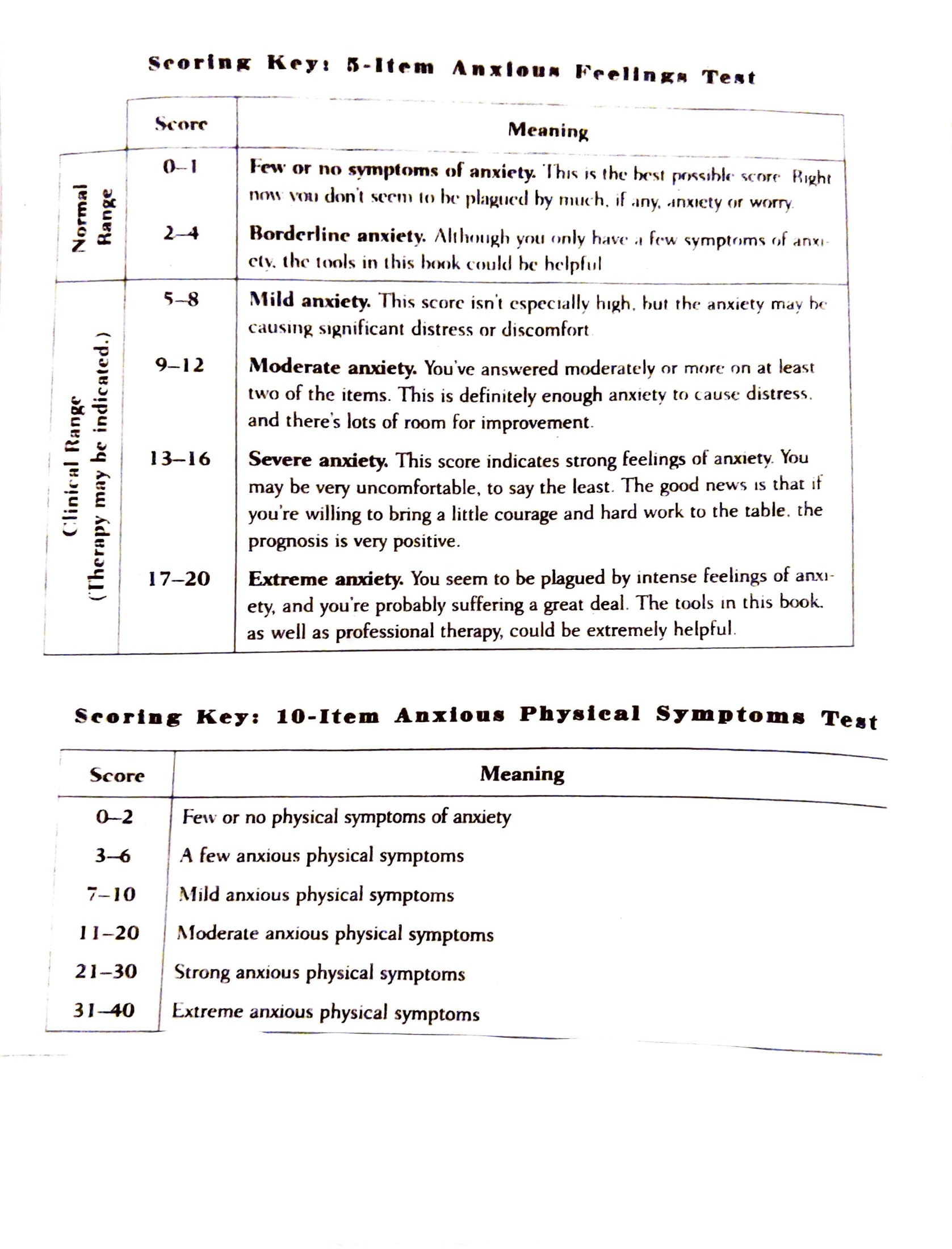
#3 Depression and Anxiety Tests


These tests are the same ones your doctor will give you to understand how you are doing mentally. They reflect a basic standard of care used by the medical profession in BC, Canada. They are based on the work of Dr. David Burns: a pioneer of Cognitive Behaviour Therapy.

I fill out my answers by reflecting on the past week and referring to my daily mood journal to remember my ups and downs.

#4 Chart the results.

I wanted to measure my progress, so I made this chart by blending some data from Dr. Burns together. It's not entirely accurate, but it helps me measure things over time. Over the years, I've made notes on my charts about things like medication change or significant events, and I have been able to measure the impact of these events on my health. 

#5 Journal 


I reflect on the past week through journaling. By this point, I usually have identified any struggles to be addressed.

#6 Make a plan 

Suppose I don't have the resources I need to address a problem. In that case, I make a plan: like contacting my doctor, reading a trusted resource on therapy techniques, planning a day of rest and self-care, or just facing up to a problematic situation that I've been avoiding so I can get it off my plate and move on.


So yep. This is what I've been doing for years. Having concrete steps to work through each Friday really helps me to focus. Hopefully, my experiences can help you too!

Also! Even if you don't work through all the steps, taking the time to fill out the depression/anxiety tests can give you a fair idea of how you're doing and if it's time to reach out for help. Many of us normalize our suffering and don't realize that constant misery doesn't HAVE to be our reality. Feeling upset by troubling events is normal. Living in a consistent state of anxiety and sadness isn't. Even in times of hardship and struggle, there is joy to be found. You can be happy again.

Tuesday, November 10, 2020

Hold Fast


    I finished this painting tonight. The paint is still wet and my eyes are roving across it, judging and delighting in the work at the same time. The process of painting this one was special to me... because I did it over a series of evenings after dinner, in the middle of our living room, dodging my kids and chatting with my husband.

It was fun because my whole family became invested in the work. My kids took to the symbolism easily and actually gave me helpful critique. My eight year old said things like: ‘Mom, you need more colour at the bottom of the tree. The top part is rich but the faded roots at the bottom make it look dead.’

They also were there to bolster me when I faltered and questioned my brush strokes. I have no formal training as an artist... and while I tell myself that being clumsy with a brush is fine, ‘it’s just a hobby anyways’, my perfectionist side kicks in and steals my joy by pointing out all my flaws. 

But the kids and my husband know that I’m weak, and when I complained, they parroted the words back to me that I have worked so hard to teach:

“You have a special style, one that is yours. It’s beautiful and unique.”

This painting is about love, about deep roots that hold fast through the storms of life. It’s about family.

One afternoon while painting, I looked over at my husband: lounging in his favorite chair and giggling his way through his TikTok feed.

My heart filled with love. “You do know that this painting is about you?" I said. "It’s about our love.”

He looked up in surprise. “Well, I know it NOW.”

😂 And I’d thought it was sooo obvious.

It’s fun to watch him look at it with new eyes, now that he understands.

And now that this painting is done, even though I held the brush, I’ll always remember it as the painting we all did together.


Monday, November 2, 2020

Inherent Dignity

 I was twenty.

I lived and worked in the Rheinhessen region of Germany. I busked at a bar occasionally and had fuzzy dreadlocks. My favourite skirt had been made from an old pair of jeans torn open at the inside seams and resown together with Sesame Street patches of Elmo and the Grouch.

My blue suede runners were two distinctly different shades. I’d talked the sales lady into giving me a discount. :)

And now I was wandering on foot through the town of Worms (Vvurms!) looking for a friend’s apartment to crash at. I had a guitar and a huge backpack with the obligatory Canadian flag. And I was lost.

The side roads were starting to look a little sketchy. I‘d stopped trying to find my friends’ place and decided I’d settle for an urban centre with a coffee shop (no cell phone... it was the dark ages still). But try as I might, every turn I made seemed to lead me onto an even narrower and more isolated street. The row apartment buildings were tall and tightly shuttered like those Easter Island heads with their eyes and mouths squeezed shut.

I turned a corner and walked into a group of young men hanging out on the street. They were laughing and talking loudly in a language I didn’t recognize. Dark-skinned, baggy clothes and bright bandannas.
The group fell silent. I nodded and smiled and kept walking. My bag was so heavy. My arm hurt from carrying my guitar.

One of the guys peeled away from his group and began following me. He began to shout. ‘Hey, girl! What are you doing, pretty lady? Nice ass...”

There was NO ONE on the street. His footsteps quickened behind me. “Come on, girl...” I began to weigh my options. I could drop my stuff and run. I could scream. I could turn and attack, try to take him by surprise.

And then I heard a voice inside of me: strong and clear as a bell. As the words filled me, my body grew still, and peace washed over me. The words were:

“Give him his dignity.”

I didn’t think. I set my guitar down and turned around with a smile and an outstretched hand. The man was only a pace or two behind me. He reacted without thinking, and his hand fell into mine. It was awkward, but we shook hands. As soon as our palms connected, I knew I was safe.

“Hello! My name is Charity. What’s your name?”

He responded on instinct. Despite a start of surprise, he introduced himself. I asked about his family, I shared about mine. He told me he was a refugee from North Africa looking to support his mother and sister. I shared some of my adventures travelling in Europe.

As we spoke, I couldn’t help but read the confusion on his face. But he was smiling. We both were. We’d made a connection.

The conversation wound down, he asked me if I’d like to go for coffee with him. I told him how great it had been to meet him, but I had a friend waiting for me.

He shook my hand again, and we parted. He walked back the way he’d come: easily, his head high, his hands in his pockets.

I found my friend’s apartment half a block away. I’d been going in the right direction the entire time.

:) God bless.


Saturday, October 31, 2020

Come my Child (An original song by me!)

 For me, poetry flows out in verse and melody. I’m not the most amazing musician but the words matter to me. :) Enjoy!


Wednesday, October 28, 2020

Vancouver’s Dropping Water Table

"So, does your work involve the Fraser Watershed around here?"

I ask her because I'm interested. I know that the Fraser Valley is extremely fertile farmland, with agricultural resources shrinking because of development. I also once heard a story about Vancouver's vanished rivers: all diverted and paved over as the city grew.

I know the Fraser river is essential. I hear about the conservation efforts around this mighty water source and the dwindling salmon stocks. I also feel the effects of longer, dryer summers and tight water restrictions. I wonder if Christy has the answers.

She laughs. Her eyes peek over her cloth mask. They are steely-grey, kind, and long-suffering. Her softness, however, is built around an iron core.

"Oh no," she says, "we work outside of the Fraser Basin."

"So, what area do you work in?"

"Just one."

"One what?"

"One river."

My friend Christy Juteau is a biologist working with A Rocha Canada, an environmental stewardship organization with a spectacular conservation center here in the lower mainland. Christy spends her days studying and fighting to restore the endangered waters of the Little Campbell River.

I try to wrap my mind around her answer. There must be hundreds of rivers in BC. Christy is trying to save one.

Like most waterways near urbanization and agricultural land development, the Little Campbell River has experienced flooding, loss of wetlands and forest habitat, and the depletion of underground water resources. This watercourse winds through Langley, South Surrey, White Rock and empties into Semiahmoo bay. It services a floodplain, an estuary and several wetlands. 


The problem seems too big, and how much does the fate of a stream really matter? Despite my best intentions, a small part of my brain glazes over as Christy talks. I live in the suburbs. I care about nature and habitat loss, but it also feels like an "out there" problem. I often think of nature as something that I "go out to."

But I'm wrong. No one can exist outside of an environmental system, even a seemingly invisible one. I know this because of the long hot summers, the smoke in the sky when the forests burn, and the rocket-like increase of insurance premiums related to flooding.

Our human-made solutions for the movement of resources and waste are woefully flawed, and we are feeling the harm. With our future wellbeing in the balance, it's time we start to think of natural ecosystems as something to be built into our communities versus being built out of them.

An example of this is our stormwater infrastructure. You know, the little sewer grate on the side of the road where the water flushes away? Sometimes there's a yellow fish painted next to it to let you know that it empties into a spawning stream. When the rain comes, stormwater drains save our communities from flooding by flushing massive amounts of rainwater and contaminants into our rivers and out to sea.

We need this stormwater infrastructure, also called 'grey infrastructure,' because of the thousands of kilometres of concrete that stop the earth from naturally absorbing the water. Before extensive human development, the ground absorbed and filtered the rain we get every year and then emptied its waters into the underground streams and aquifers. Now, the rain comes smashing down upon an impervious tabletop of roads, roofs and parking lots. In a race to prevent floods, we can't flush it away fast enough. The rainwater mixes with toxic pollutants from dog waste to the chemicals in rubber tires. It is then dumped directly into groundwater-fed streams, causing them to burst their banks and depositing piles of polluted muck that kills off the fish before they have a chance to spawn.

At least… that's what happens in the rainy seasons. Because we flush our winter rain out to the ocean, there is less water to feed BC's underground water sources. Sections of streams vanish completely every summer, stranding fish and further destroying animal habitats. Even with global warming and longer, hotter summers, there shouldn't be a need for painful water restrictions. We should have more than enough stored in the natural underground aquifers beneath our feet. But we don't. We are flushing our own water resources literally down the drain.

The connection is surprisingly straightforward. As shown in the graph below, when more than 10% of our land is covered in impervious surfaces (compacted soil, roads, roofs, sidewalks, etc.) it is destructive to our local streams and wetlands.

Once the amount of impervious surface cover rises above 25%, stream banks collapse, and the water quality kills only but the hardiest of species. Sources of clean drinking water are destroyed.

This figure from the University of Maryland shows us just what stream degradation looks like, the species are different than here in BC, but the damage is the same:


Now, here again, is the map of the Little Campbell River watershed, BC, Canada.


This is the area that my friend Christy Juteau studies. Much of spreads across an area that we in the lower mainland would consider relatively low development. It is full of giant rolling parcels of land for private and agricultural use. In 2019 Christy and her team examined and measured the land using aerial imagery research on land use. They concluded that this pastoral swath of land was at about 18% impervious cover.

The impervious surface of high-density metropolitan areas like greater Vancouver is observably much higher. I couldn't find any exact numbers, but I think it's telling that Greater Vancouver recommends that a single-family lot for redevelopment should have no more than 70% impervious area. It's also only a recommendation, and it doesn't include commercial, high-density, and existing developments where impervious cover can be as high as 90-100%

Here are some pictures of Vancouver's lost streams: waterways that are buried or no longer exist at all.


James, Herbert and Hugh Matthews in a canoe on the south shore of False Creek c. 1902


Christy's job revolves around the restoration of her river. Still, she's not going to get far as long as toxic flooding in the winter and depleting underground water resources choke the river. To save the Little Campbell River, the ecosystem it supports, and our own freshwater resources, we need to change.

The good news? Change is possible and begins at a municipal level. Like Christy, look to the ground beneath your feet. Feel the earth and realize your dependence and connection to it. When we develop the land beneath us without considering the natural systems we are displacing, we borrow time from our future livelihoods.

And happily, while the problem is complex, there are many innovative solutions available. Rain gardens are one of them. 

Volunteers Oliver Xie and Carolynne Robertson get digging during a demonstration of the North Shore Rain Garden Project held at Capilano Mall Saturday. photo Ben Bengtson, North Shore News

Rain gardens are an example of "green" stormwater management. Some other ideas include increased tree cover, downspout disconnection, rainwater harvesting, grassed swales, green roofs, and bio-retention areas. This type of infrastructure allows our earth to reclaim and filter the deluge of rain that falls here in the winter. It gives BC's underground water resources a chance to replenish and feeds our waterways in a way that protects the food chain.

While it is encouraging to see this type of infrastructure beginning to gain some attention, most of it is installed by volunteers through "demonstration" projects. If we are going to build our cities for the future, this type of rainwater management needs to become the norm and not the exception. At the moment, the cost is considered prohibitive and adds thousands of dollars to any new development project. These types of systems also require a budget for regular maintenance. However, just as it is currently cheaper to produce virgin plastic products than using recycled materials, flushing our water away from cities destroys wildlife habitats and borrows directly from our future.

How can you help? Write to your city council and let them know that the use of green infrastructure matters to you! Tell your favourite voted representative that you do not want further development without consideration for responsible resource management. If you happen to live in the Township of Langley as I do, engage with the city's climate action plan by adding your voice to this survey:

https://www.tol.ca/at-your-service/sustainability/climate-action/

Let's bring nature back into the city.

A special thanks to A Rocha Canada for their conservation work and tireless commitment to environmental restoration.


References:

https://arocha.ca/where-we-work/brooksdale/little-campbell-river/
https://www.watercanada.net/feature/sustainable-stormwater-management/

http://www.metrovancouver.org/services/liquid-waste/LiquidWastePublications/StormwaterSourceControlDesignGuidelines2012StormwaterSourceControlDesignGuidelines2012.pdf

https://citeseerx.ist.psu.edu/viewdoc/download?doi=10.1.1.627.5788&rep=rep1&type=pdf
Impervious Surfaces in French Creek Rick Guthrie, M.Sc., P.Geo., Regional Geomorphologist And John Deniseger, R.P.Bio., Environmental Impact Biologist Ministry of Water, Land and Air Protection Vancouver Island British Columbia 2001 

Restoring Streams/ University of Maryland Center for Environmental Science
https://www.umces.edu/research-highlights/restoring-streams

https://dnr.maryland.gov/streams/Pages/streamhealth/How-Impervious-Surface-Impacts-Stream-Health.aspx

Region‐wide Baseline for On‐site Stormwater Management February 2017 For use on Single‐lot Residential Development in the Greater Vancouver Sewerage and Drainage District.

file:///C:/Users/chari/AppData/Local/Packages/microsoft.windowscommunicationsapps_8wekyb3d8bbwe/LocalState/Files/S0/1866/Attachments/Region-wideBaselineOnsiteStormwaterManagement-Feb2017[3641].pdf

https://www.nsnews.com/community/north-shore-rain-garden-project-demonstrates-natural-technology-1.23953643

https://fraserstreetstories.ca/lost-streams-of-vancouver/

https://vancouver.ca/home-property-development/green-infrastructure.aspx

https://www.tol.ca/at-your-service/sustainability/climate-action/