January 2022 has been a little like a fire cracker that fizzled out. I was so excited for that bang of fresh new goals, dreams and momentum to energize my life… but instead, 2022 brought with it more lockdowns and homeschooling. Like so many of us around the world right now, my family has caught the omicron virus. Thankfully, our symptoms are mild, but that doesn’t mean they’re not challenging! Seems like we’ve all had a head cold for weeks now.
Having the kids home and working with low energy resources has also meant being less productive when it comes to writing. However, my creative brain is always busy and always making something! Take this coffee shelf for instance:
I had time on my hands and I wanted some more organization, so I made this little shelf from papier-mâché and cardboard. Yes, I know it’s a bit warped. No, I don’t think it will last forever. Still… it was a bright spot during a dreary January and the process gave me joy.
So in celebration of the small things I create, for no other reason than I like to create, recycle and save money, I thought I’d post this collage of some of the random and useful things around the house that I’ve made.
Denim rag rug. Everything about this was done by hand… it took about 8 months!
So many crocheted and knitted blankets! I don’t have any advanced skills in this area, I just like using up scrap thrift-store yarn. I find both crochet and knitting soothing for my busy brain.
I was looking for a way to recycle wine corks. I made this pot trivet from a cookie tin lid, twine, cut corks and glue.
This isn’t a recycling project, but I like to design and print off my own calendar stickers for planning events.
I cut a torn bed sheet into strips and crocheted a rag rug.
A glass jar and some hemp twine makes a toothbrush holder.
Quick! I need something to hang necklaces on!
This jewelry holder was pieced together from a handmade picture frame, painted canvas board and drawer pulls.
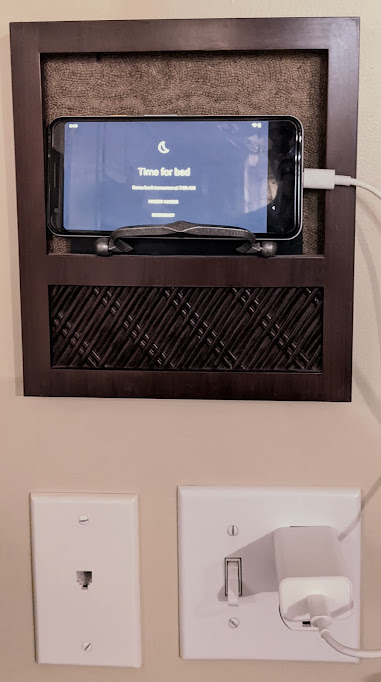
An old picture frame and a drawer pull makes a phone stand/charging port for the kitchen.
Cardboard, burlap, and a frame, is an easy way to create earring storage.
The kids smashed the shade of this lamp. I made a new shade with papier-mâché and acrylic paint, building off the frame of the old shade.
:) So, this is what I do when I’m not doing anything in particular at all. I mend, recycle and make!
Honourable Councillors, Mayors, and Chief of the MVBD:
This story isn’t mine, but it moves me.
“Bye-and-bye (the two boys) came to a river and walked beside this, following it down until they came to the sea. Now the water was a long way out, and as they walked over the sand, they saw water spurting up all about them. “Look!” said one, “there must be something down there; we will find out what it is!”
They got sticks and scraped away the sand until they came to a large clam. It may be good to eat, they thought, and breaking it open, they tasted it. Ah, it was good! They both began to dig, and very soon had a large pile of clams. They carried them up to the beach and, getting cedar sticks, made a fire and put the clams beside it to cook.
For many months they lived at that place beside the river, always having plenty to eat, for besides the deer they killed, they could always dig clams when the water went out. One day, when the water was very low, they saw something splashing in the river, and, hurrying to look, found more salmon than they could count, swimming up the river. The water was filled with salmon, and more and more were coming, all pushing and fighting to get far up in the fresh water…
… It did not take the boys very long to get back to their old home, for they walked night and day, they were in such a hurry to see their family again. One morning the mother woke to see two young men standing in the door of her little house. “We have come back to you mother!” they called. “We have found a place where food is all about us—no need to hunt for hours for a meal. There is food that you have never heard of—more than a large tribe would need. See, we have brought some of the new food for you to eat.”
This recounting is part of the origin story of the K’ómoks First Nation, written down in a book titled “Two houses, half-buried in sand.” by Beryl Mildred Cryer. This origin story was translated by Mary Rice from an elder from Kuper Island prior to 1932. Cultures - K'ómoks First Nation (komoks.ca)
This story sends a thrill down my spine, for it recounts the plentiful food and fresh water resources of the Georgia Strait before urban, agricultural, and industrial wastewater poisoned our shores. Imagine a beach that delivers miles of fresh shellfish with every ebb of the tide! Imagine a stream so abundant with spawning salmon that you can catch the fish with your hands and toss it up on the river bank!
I appeal to every Mayor and Councillor upon the Metro Vancouver Board of Directors:
Hold this image in your mind as you consider whether to approve the expansion of industrial land across the Urban Containment Boundary. This boundary was set in place to protect the endangered watershed of the TATALU (Little Campbell River). The use of this forested and pastoral area for industry will send an unsustainable burden of contaminated water into the watershed, destroying a critical salmon spawning river and flooding the shores of the Semiahmoo First Nation Reservation.
Don’t let this short-sighted destruction be your legacy. Our waters can be restored. In fact, there are several environmental organizations like the Shared Waters Alliance who have spent the last two decades cleaning and rebuilding our waterways. A return to clam harvesting and a thriving orca population is not impossible. However, the development of this protected land in South Surrey into industrial land will destroy decades of restoration. It will also further directly poison the land and water of the costal Semiahmoo First Nations People, and expose the local municipal governments to litigation. This Wednesday, vote
AGAINST the proposed amendment to the South Campbell Heights Regional Growth Strategy.
Charity Gosling
To learn more about this important vote that will turn protected land into industrial use, and how you can help, go to:
A friend once shared that her youngest son was born with a painful yet invisible neurological condition. For years the young boy struggled with excruciating pain. Still, he lacked the language and understanding to communicate what was wrong because the pain was normal for him. It wasn't until the young man reached his early 20s that he gained the insight and language to share his experience and to finally receive treatment.
This story reminded me of my experience of mental illness. I lived with depression and anxiety after the birth of my second child. My brain hurt, but it was unlike any type of pain I'd ever known. I had no similar experience to draw on. I lacked the language to say what was happening. It made it nearly impossible for me to verbalize to myself what was wrong, much less express it to others.
But that didn't mean that my pain wasn't real.
I am so grateful that our culture is beginning to give language and recognition to the pain of mental illness. After a journey of years with metal injury, I now understand that my pain is real because my brain is real. When you bang your shin, you don't need to look to know something is wrong. When something triggers my anxiety, I am now experienced enough to know "'ouch' that hurt! I need to take care of that so I can heal".
But it's still hard to precisely describe the sensation, mainly because, short of using an MRI machine, you can't see the damage and we don’t seem to have the language to communicate exactly what is going on.
Still, I want to try… because my mental pain is a physical sensation that I am learning to identify. The closest way I can describe it is it feels like an aching bruise. I feel it and know that something inside my head just took damage. Some parts of my brain grow foggy, and other parts start to over-fire. Panicking neurons lead to secondary sensations like nausea and a pounding pulse. I may start to blackout. In extreme cases, my nose might even begin to bleed.
I think of medication for mental illness as a supportive cast to protect the damaged areas of my brain and of therapy as rehab to strengthen and protect those areas. With these supports, I can calm and regulate my nervous system when something 'bangs' me mentally. Even better, I have learned that I can protect myself BEFORE mental injury occurs with things like exercise, nutrition, sleep, and journaling.
Do you know what else? Just like no one escapes external injuries on this journey of life, I doubt that any of us totally escape mental injury. A traumatic situation bruises your mind just like a dropped dishwasher door can knock your shins. Some wounds heal quickly. Some can be ignored. Some leave scars that inhibit your original cognitive function. Like external ailments, some mental injuries can heal and others can be even cured. Some mental ailments may presently lack a cure, but the symptoms can, happily, be managed.
Addressing mental pain and seeking out ways to heal just makes sense. We would never demand that someone continue to walk on a broken leg! Would you call an athlete rehabbing an injury weak? Or would you admire the grit it takes to return to health?
If you know what I’m talking about, I want to reassure you: you're not ‘crazy’. The pain in your brain is a symptom of a mental injury. That drowning feeling that cripples you and presses you into the bed? That's not you; it's your injury. There is help. It can get better.
In my dreams, my family owns a house. The house stands upon the top of a grassy hill like a great wooden ship cresting a wave. The sea is the dreary and complex city pressing up against the hill on all sides, held at bay by a great tall white wall.
This is the home that no one else wanted. When we found it, it had been the ancient squat of a mad hoarder, with piles of garbage up to our necks in every room.
But we loved it. We bought it and began to clean it. As we cleaned, we discovered that beneath the garbage was a vast and dazzling collection of fantastic items from across the entire world. Each room on the second and third floors of this house is dedicated to a different collection.
The home in my dreams is full of wonders. Everything is made of polished gleaming wood. The bay windows in the dining room take the space of an entire wall and somehow always look out onto an endless misty moor. There is always something to repair in this home, and there is always another nook to discover. Usually, these nooks are small sunny spots filled with pillows and books.
The basement of the house is frightening and fascinating. It is the only place in the home that defies order, no matter how hard my lucid dreaming self tries to repair and clear it. The basement is always dimly lit with a maze of ancient clothes from across time hanging on racks. The clothes are beautiful and delicate, and yet they fit poorly and always smell bad. The clothes are the happiest staying where they are.
The basement floor is wet. Beyond the clothes, there is a mountain of rusted and tangled sports equipment, like a hedge of thorns.
If you can make it past the broken sports equipment, you come to a place where you see that the home's foundation is cracked. Above the cracked foundation, there is a large hole rotten through the wooden wall. This hole refuses to be repaired, no matter how I try, and it fills me with unease. I must face the fact that one day my dreams will crumble, and the house will collapse. And maybe we were fools to have bought this home at all.
The hole weeps like an open wound, and it reminds me of the heel of Achilles. Wild dogs, spiders, and raccoons come into the basement through the hole and make nests in the ancient clothes.
I flee back up to the dining room and try not to think of the hole.
There is a secret elevator in the house. It took some time to find it, and it doesn't always work. But if you can get over the fear of cramped spaces and the possibility that the elevator might get stuck and trap you forever between the house's walls, you can take the elevator to the very secret top floor.
When you step out of the elevator, you see that half of the top floor opens to a wild alpine rooftop garden. The other half of the secret top floor is cool, white, and metallic. There is a futuristic command interface inside of an egg-shaped room. This room looks like the bridge of a battleship with a large screen and a wide control panel. This is where the greatest secret lies. My wonderful house on the hill doesn't just look like a ship; it IS a ship, controlled by science and magic and a benevolent AI personality.
All you have to do is say the word, and the city around you grows liquid. The house turns into a mighty ship and sails through the world's landscapes as if they were water. You can go anywhere, have any adventure and sometimes even lift up off the earth and sail through the sunrise.
I return to this magical home many nights while I sleep, and the dream builds and shifts. There is a trapdoor leading to a secret underground world. There is a train that circles the base and never lets you leave. There is a room where you can learn magic as long as you never tell anyone else where it is. And gargles. There are gargoyles on the chimney tops...
But I have spent too long in bed. There are chores to be done and people to greet.
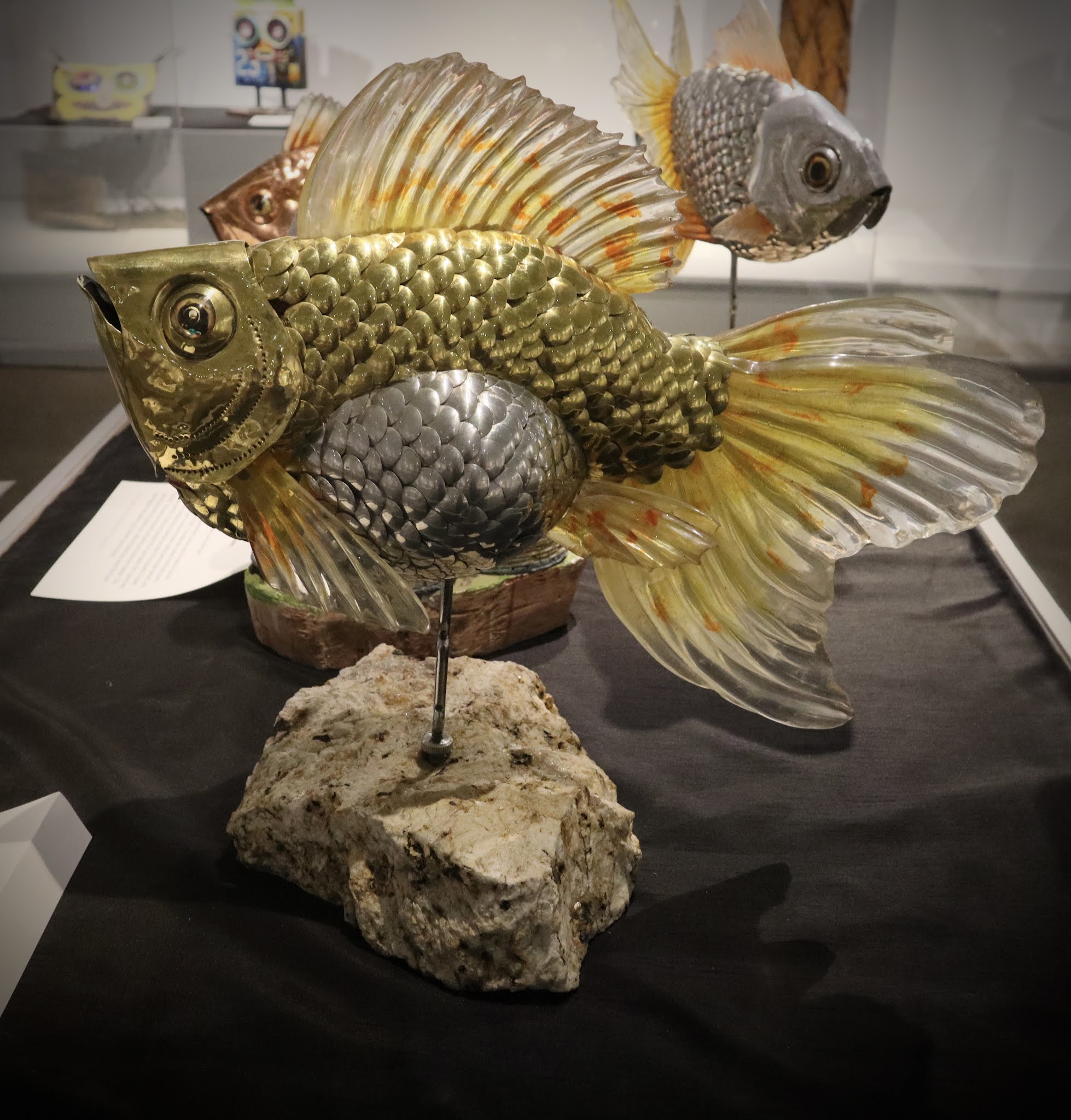
This past spring the local British Columbia artisan community came together to create an art exhibit from recycled materials. I had so much fun participating! The exhibit was hosted at the Langley Centennial Museum and I was honoured to be able to capture these pieces during my visit. I hope you find this work as lovely and inspiring as I did.
This day means something different this year. As a Canadian, it’s hard to rejoice on a day celebrating the colonial ‘achievements’ that have come from Canada’s founding as a Dominion under the British Empire. The failures of Canadian governance churn my stomach.
I want to tell you a story. I call it a story because my knowledge of it is filled with holes, choice memories, and intentional biases. But it is the story of myself that I know. It goes like this:
My ancestors were Scottish settlers that came to Canada in the late 1800s. They were teachers, writers, engineers and at least one lawyer. Many of my female ancestors wrote poems, songs, novels, and letters. I even have several letters written to my great-great-grandmother, Florence Carmichael, from Nellie McClung and Lucy Maude Montgomery, giving her advice on breaking into the publishing industry. In one of the letters, Nellie McClung says to my great-great-grandmother that “publishers, as a class, are absolutely lacking in literary taste.” Mrs. McClung sounds firey!
Since the crossing, my Scottish ancestors married Danish, Irish, and French settlers and helped establish North Bay, Ontario. My story also includes a Metis woman among the shuffle of old photographs (now lost). My father sings songs and stretches canvas across the frames of hand-shaped cedar canoes. I look at my skin next to his sun-darkened hide, and I am as white as the northern snow. The rumours of a secret native ancestor, like many similar ‘Indian princess’ stories told by European settlers, are probably BS. I don’t know what to do with this bit of rumour.
The problem with my story is that, beyond whispers of a secret Metis ancestor, it says nothing about the aboriginal people that lived in the land where my family immigrated to. While my ancestors were busy building a new town, the Canadian government spun the line that it was the white man’s responsibility to force civilization upon the remaining aboriginal population. The means to do this was the implementation of the residential school system. The despicable man that implemented many of the horrific policies of the residential school system at the time was fond of saying, “kill the Indian, save the man.” (Duncan Campbell Scott)
Many white settlers in the late 1800s believed only enlightened Europeans knew what was truly best for the Canadian aboriginal population. My ancestors were sold a grand picture of the future, where through forced European education, the civilized aboriginal would walk, talk and believe as the white man, and in doing so, would find what it meant to be truly happy.
A stark example of this attitude can be found in a quote from a man named P. G. Anderson, the Indian Affairs Superintendent. In 1846, at the General Council of Indian Chiefs and Principle Men in Orillia, Ontario, he stated,
“... it is because you do not feel, or know the value of education; you would not give up your idle roving habits, to enable your children to receive instruction. Therefore you remain poor, ignorant and miserable. It is found you cannot govern yourselves. And if left to be guided by your own judgement, you will never be better off than you are at the present, and your children will ever remain in ignorance. It has therefore been determined, that your children shall be sent to Schools, where they will forget their Indian habits and be instructed in all the necessary arts of civilized life, and become one with your white brethren.”
However, the truth behind Canada’s forced reeducation policies had nothing to do with education. They were about repression and submission. The schools were designed not to elevate but to destroy First Nations children’s culture, language, and beliefs. Ironically, real education within the residential school system was actively discouraged. Only 3% of all First Nations children progressed in their education beyond grade 6. It was actually against the law for First Nations children to attend regular schools until 1945.
In the 1940s, at a residential school in northwestern Ontario, a Federal Inspector, in a letter to the school’s administrator, admonished him for encouraging Native students to go to grade 9 and beyond. “If we let the Indian go to grade 9, then they’ll want to go to grade 10, and then they’ll want to go to university, and that’s what we don’t want!”
I shake in shame. The abuse and murder of the First Nations people in Canada are a part of my story that was conveniently untold until now. The unpleasant truth was hidden from me; why? Because, for all their grand words, European policymakers and the people that supported them knew that what they were doing was wrong. Why hide it otherwise? Why bury the truth? Instead, I was taught that the land my people came to was wild and empty. I didn’t even know what a residential school was until my early twenties.
But I knew the slurs. I felt the mistrust and suspicion between the native and settler communities, yet I didn’t know why this tension existed.
Now I know where the tension comes from. I know of the pain of the dark secrets untold in the true story of my family history. My family continues to live in relative comfort and privilege in a land of wealth. Yes, there are also times of poverty and struggle within the stories of my settler family, yet I am white. I am insulated. When I ask for help and access to government services, I have little difficulty being heard and finding the support I need.
The Canadian government is responsive to my needs because white settlers created it to serve the Europeans who colonized Canada on behalf of the British. In other words, it was a white government built to serve white colonists.
I don’t know what my ancestors knew. I don’t know what they voted for or if their actions were malicious or criminally ignorant. But I know now what was done in their name. To turn a blind eye to what happened would only further the suffering of the victims.
So on this Canada Day, I choose to acknowledge the sins of the past, and I understand that the structures and policies that shaped the government as we know it no longer function in the service of the Canada I hope we can become. We have 200+ years of miseducation to unlearn. European colonists were wrong to assume that they ‘knew best’ for a culture different from their own. The descendants of these colonists would be wrong if we dare to continue to act on this assumption.
Today, First Nations, new immigrants, refugees and the descendants of early settlers are all a part of the fabric of Canada. To build better, we must all share power. The government can no longer serve only one culture. Despite the sins of the past, I do remain hopeful. I believe that we can learn that with genuine compassion, respect, humility, and cooperation Canada can become a country we can all celebrate.