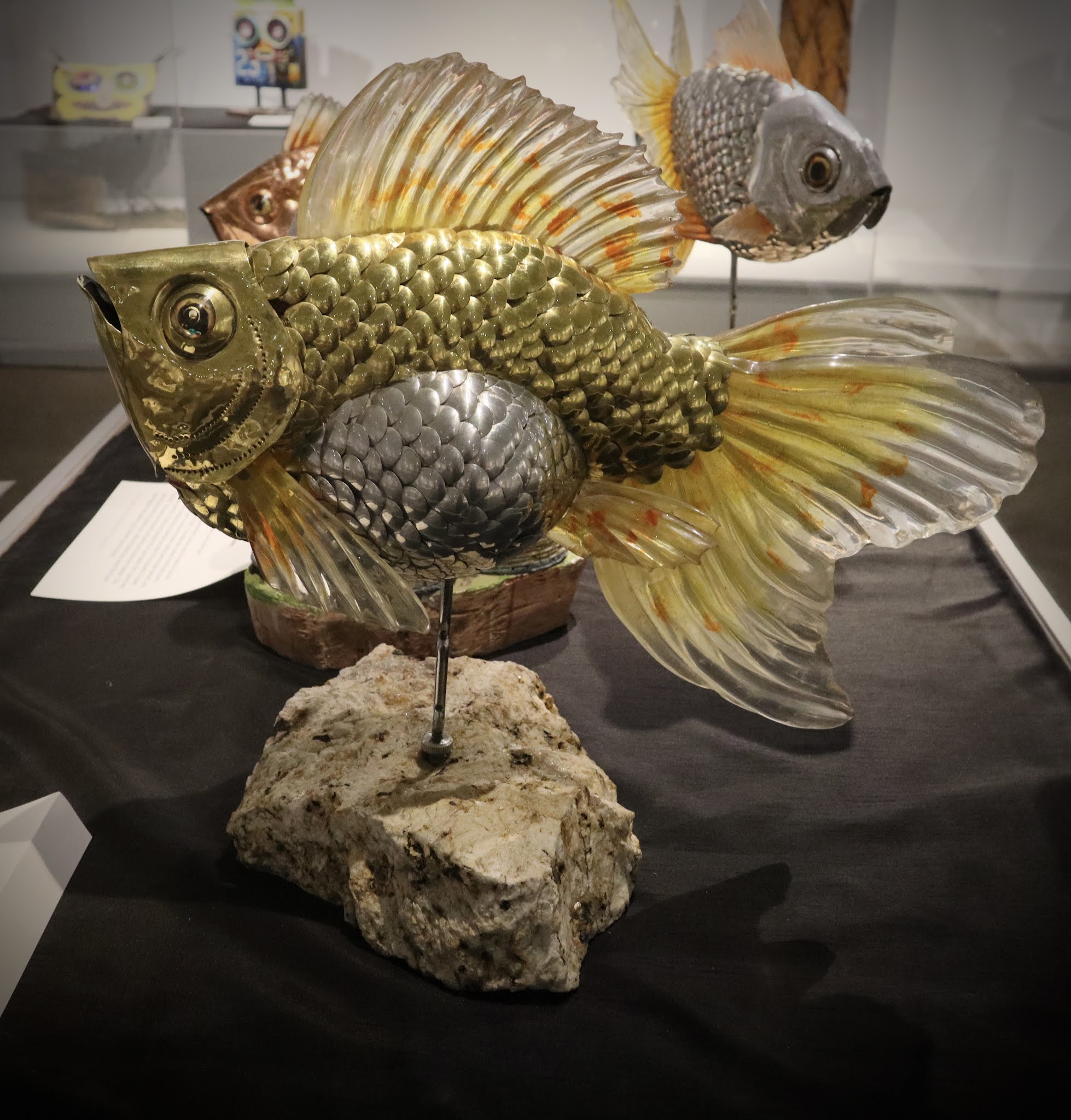
This past spring the local British Columbia artisan community came together to create an art exhibit from recycled materials. I had so much fun participating! The exhibit was hosted at the Langley Centennial Museum and I was honoured to be able to capture these pieces during my visit. I hope you find this work as lovely and inspiring as I did.
This day means something different this year. As a Canadian, it’s hard to rejoice on a day celebrating the colonial ‘achievements’ that have come from Canada’s founding as a Dominion under the British Empire. The failures of Canadian governance churn my stomach.
I want to tell you a story. I call it a story because my knowledge of it is filled with holes, choice memories, and intentional biases. But it is the story of myself that I know. It goes like this:
My ancestors were Scottish settlers that came to Canada in the late 1800s. They were teachers, writers, engineers and at least one lawyer. Many of my female ancestors wrote poems, songs, novels, and letters. I even have several letters written to my great-great-grandmother, Florence Carmichael, from Nellie McClung and Lucy Maude Montgomery, giving her advice on breaking into the publishing industry. In one of the letters, Nellie McClung says to my great-great-grandmother that “publishers, as a class, are absolutely lacking in literary taste.” Mrs. McClung sounds firey!
Since the crossing, my Scottish ancestors married Danish, Irish, and French settlers and helped establish North Bay, Ontario. My story also includes a Metis woman among the shuffle of old photographs (now lost). My father sings songs and stretches canvas across the frames of hand-shaped cedar canoes. I look at my skin next to his sun-darkened hide, and I am as white as the northern snow. The rumours of a secret native ancestor, like many similar ‘Indian princess’ stories told by European settlers, are probably BS. I don’t know what to do with this bit of rumour.
The problem with my story is that, beyond whispers of a secret Metis ancestor, it says nothing about the aboriginal people that lived in the land where my family immigrated to. While my ancestors were busy building a new town, the Canadian government spun the line that it was the white man’s responsibility to force civilization upon the remaining aboriginal population. The means to do this was the implementation of the residential school system. The despicable man that implemented many of the horrific policies of the residential school system at the time was fond of saying, “kill the Indian, save the man.” (Duncan Campbell Scott)
Many white settlers in the late 1800s believed only enlightened Europeans knew what was truly best for the Canadian aboriginal population. My ancestors were sold a grand picture of the future, where through forced European education, the civilized aboriginal would walk, talk and believe as the white man, and in doing so, would find what it meant to be truly happy.
A stark example of this attitude can be found in a quote from a man named P. G. Anderson, the Indian Affairs Superintendent. In 1846, at the General Council of Indian Chiefs and Principle Men in Orillia, Ontario, he stated,
“... it is because you do not feel, or know the value of education; you would not give up your idle roving habits, to enable your children to receive instruction. Therefore you remain poor, ignorant and miserable. It is found you cannot govern yourselves. And if left to be guided by your own judgement, you will never be better off than you are at the present, and your children will ever remain in ignorance. It has therefore been determined, that your children shall be sent to Schools, where they will forget their Indian habits and be instructed in all the necessary arts of civilized life, and become one with your white brethren.”
However, the truth behind Canada’s forced reeducation policies had nothing to do with education. They were about repression and submission. The schools were designed not to elevate but to destroy First Nations children’s culture, language, and beliefs. Ironically, real education within the residential school system was actively discouraged. Only 3% of all First Nations children progressed in their education beyond grade 6. It was actually against the law for First Nations children to attend regular schools until 1945.
In the 1940s, at a residential school in northwestern Ontario, a Federal Inspector, in a letter to the school’s administrator, admonished him for encouraging Native students to go to grade 9 and beyond. “If we let the Indian go to grade 9, then they’ll want to go to grade 10, and then they’ll want to go to university, and that’s what we don’t want!”
I shake in shame. The abuse and murder of the First Nations people in Canada are a part of my story that was conveniently untold until now. The unpleasant truth was hidden from me; why? Because, for all their grand words, European policymakers and the people that supported them knew that what they were doing was wrong. Why hide it otherwise? Why bury the truth? Instead, I was taught that the land my people came to was wild and empty. I didn’t even know what a residential school was until my early twenties.
But I knew the slurs. I felt the mistrust and suspicion between the native and settler communities, yet I didn’t know why this tension existed.
Now I know where the tension comes from. I know of the pain of the dark secrets untold in the true story of my family history. My family continues to live in relative comfort and privilege in a land of wealth. Yes, there are also times of poverty and struggle within the stories of my settler family, yet I am white. I am insulated. When I ask for help and access to government services, I have little difficulty being heard and finding the support I need.
The Canadian government is responsive to my needs because white settlers created it to serve the Europeans who colonized Canada on behalf of the British. In other words, it was a white government built to serve white colonists.
I don’t know what my ancestors knew. I don’t know what they voted for or if their actions were malicious or criminally ignorant. But I know now what was done in their name. To turn a blind eye to what happened would only further the suffering of the victims.
So on this Canada Day, I choose to acknowledge the sins of the past, and I understand that the structures and policies that shaped the government as we know it no longer function in the service of the Canada I hope we can become. We have 200+ years of miseducation to unlearn. European colonists were wrong to assume that they ‘knew best’ for a culture different from their own. The descendants of these colonists would be wrong if we dare to continue to act on this assumption.
Today, First Nations, new immigrants, refugees and the descendants of early settlers are all a part of the fabric of Canada. To build better, we must all share power. The government can no longer serve only one culture. Despite the sins of the past, I do remain hopeful. I believe that we can learn that with genuine compassion, respect, humility, and cooperation Canada can become a country we can all celebrate.
It’s been an emotional month for me. The kids have had their share of problems at school, and my family has been plagued with health issues. There’s also been the possibility of a job change and a potential move, which makes everything feel unsettled.
Whenever I plant a seed in my garden, I wonder if I will get to watch it bear fruit or if we will move. Honestly, I don’t know.
Happily, I’ve been reminded that I have a superpower to help me navigate uncertainty, burnout, and relationship conflict. You have it too.
It’s our emotions.
For generations, we’ve been taught to ignore and repress our emotions. Another school of thought suggests that giving in to your emotions by wild outbursts of expression is ‘healthy.’ I want to challenge you to think about your emotions differently. They are not bad or good. They are not to be repressed, nor do we have to surrender our will to emotional impulses. Instead, emotions are simply a source of information about our environment and our relationship to that environment.
I think of my feelings as a sixth sense, a way of gathering information that is often overlooked and undervalued. Ignoring my emotions is kind of like putting a piece of electrical tape over the ‘check engine light’ in my car and continuing to drive.
When I feel a strong emotional response to something, it’s essential to take the car to the shop and take a peek under the hood. I do this by first doing a body scan. Are my physical needs being met? Am I getting enough sleep, balanced nutrition, exercise? Have I done anything recently to throw my hormones off balance (medications, supplements)? What about withdrawal/ dependency symptoms (caffeine, alcohol)?
Next, I make a list. I write down absolutely every unfinished task weighing on my mind. Once my mind is free from the burden of trying to recall a lengthy list of ‘ought to-dos', I place it aside. I might schedule a time to look at this list later by making a note on the calendar. When the time is right, I will organize my tasks according to importance, delegate what I can, and trash what really doesn’t matter. But now is not the time. I put the list out of sight and release it from my mind.
Now, I move outward. Sometimes, I know where the source of my strong emotional response lies, but sometimes it takes a little digging. Journaling helps with this process. I often find a difference between what I think I ‘should’ feel about a situation and what I actually feel.
Anger lets me know a personal boundary has been violated. Unease can expose the fact that a situation feels unsafe. It goes on… but honesty is critical. I swear and break the pencil lead on the paper. I have placed myself in a quiet, safe space. I can write how I really feel.
Once the problem is exposed, I brainstorm a way forward. What needs to change? What boundary needs to be expressed? I move forward in the direction of peace, lightness, and release. I chose to act, not in a manner controlled by my emotions but in a way that honours them. I will state what is needed with empathy, compassion, and a clear, firm understanding of my boundaries.
I am not a therapist, but I am a human. I think and feel, and like all of us, I get banged up on this walk of life. This is a process that I have developed over several years of practice with Cognitive Behaviour Therapy. Accessing the information passed to me through my emotions gives me a deeper understanding of myself and the world I live in. It allows me to live in a way that feels more balanced, peaceful, and productive.
A note about productivity. I often fight the need to decipher my emotions because I usually measure my value by how much I produce. I don’t want to stop and reflect. I want to check that next to-do off the list. A time of reflection feels like being lazy.
But the truth is the opposite. If I really want to get through that list of things I'd like to do… and do them well, I MUST stop and ‘check the engine.’ I can spend three days pushing my miserable self beyond the point of burnout to do the same amount of work a happy, well-adjusted me can accomplish in an afternoon.. ;) Time really is relative!
Not that productivity should be the way we measure worth, but especially as someone who creates regular online content, this measure of worth is something I struggle with. So understanding that self-care actually INCREASES my productivity motivates me to take the time to keep the engine oiled. Listening to the information given to me via my emotions makes me a better lover, parent, creative etc.
And hopefully… someday soon, I will internalize the truth that we are all inherently worthy of love and care. To exist is to be worthy of love. I am loved; I am worthy of care. I deserve health, security and peace of mind... simply because I am.
I'd heard on the news that things were getting bad in the hospitals. A third spike in COVID cases has hit us hard here in the lower mainland. I believed it, but now I get to see it.
I'm writing this while biding my time in a Lower Mainland emergency waiting room for a non-critical, non-life-threatening condition. I inhaled some harsh chemicals by accident and slightly damaged my airway. I've got a dry hack and no voice. Poison control told me to come in once the coughing refused to settle.
I probably need a prescription for an inhaler or something.
I've been here for 7 hours so far. And I blame no one. The elderly lady with the head wound has waited longer. One young guy is pretty sure he passed all his kidney stones while waiting and is ready to go home now.
Suspected COVID patients sit over to my right. They are supposed to be behind a screen, but there are too many. The hospital is beyond capacity. It's been crowded for hours. Only parents of sick kids can stay; other supportive relatives have to leave. Nurses are run off their feet.
Something brown and slick oozed out of a patient's shoe and across the floor. The trail followed him as he left the emergency room, his ankles swollen and inflamed. The fluid has been dragged around by shoes and wheelchairs.
The single patient washroom here has been wiped down once in the last six hours. I jumped on the chance and was the first one in after the clean.
I hack and cough while returning to my seat, and I get dirty looks from an older man hugging his catheter bag. I want to explain that I'm not contagious, but I can't talk.
I can't imagine how hard it would be to work here. And I know there are problems with funding and staffing that extend beyond the current pandemic. I'm just saying that the influx of patients is stressing a system that already needed help.
I'm also not writing this to judge or complain, but rather to write down a witness statement and add my own small touch of humanity to the numbers here in the lower mainland of BC:
Over 1000 new cases a day.
Stay home, stay safe, stay kind.
And love on our health care workers. No matter how short-tempered they may sound! ;) They are saving lives.
Thank you to all the staff working their butts off around here! And to the cleaning staff who I see running about constantly cleaning equipment and chairs. I’m sure they’ll get to that brown puddle as soon as they can. 😨😶
I've got this old garden grapevine in my backyard. It's massive, and it comes with a family of cute raccoons every summer. I usually harvest AT least 100lbs of green grapes each year. So what's a girl to do but make wine? It took me a bit to figure out my technique, so I'd thought I'd record what I've learned and share it with you! Just in case... you know... you also have way too many grapes in your backyard. :)
Ingredients
20 L of grape juice (100lbs of crushed and destemmed grapes)
1 packet of wine yeast (this is what you need to start a yeast colony for up to 5 gallons of wine, even if you are making less!)
Yeast nutrient (1 tsp./ gallon)
Sugar
Campden tablets (10)
Equipment
Five+ gallon bucket
Carboy
Airlock
Big long spoon
Hydrometer
Siphon hose
24 wine bottles bottles
Corks
Corker
Sanitizing solution (I use Aseptox)
Mask
*A friendly relationship with a local brewing store. I'd like to send hugs to Von Euw Brew for equipment and advice. All my equipment images do have Amazon links, but honestly, you'll save money and build great relationships if you shop local!
Method
Sanitize
Fill a tub up with your sanitizing solution and immerse all equipment needed. Rinse well with hot water. Do this before each step.
Prepare Fruit/Sterilize Must
Destem and crush grapes to release juice. Fill your 5-gallon bucket. It's OK to leave the skins in the juice if you've got the room. This juice/skin mixture is called must.
Put on a dust mask.
Crush up 5 Campden tablets and mix into juice. Wear your mask because the powder and the gas that is released during this process is a respiratory irritant (it can chemically burn the back of your throat). However, the Campden tablets kill off wild yeasts and bacteria, making the fermentation process safer for an amateur like me.
Mix.
Allow the must to rest for 24 hours. Cover your bucket with a loose lid or a clean towel to prevent flies from getting in but allowing carbon dioxide to escape.
Adjust Sugar Levels
(to determine the alcohol level of your finished wine)
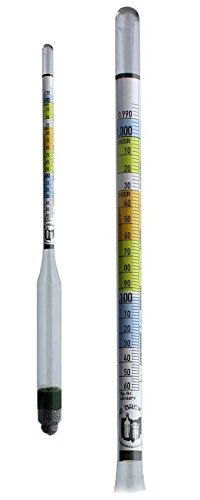
Check the sugar levels of your must with a hydrometer. The amount of sugar in your must will translate to how much alcohol there is in your finished wine. Drop the hydrometer into your must. The hydrometer will show you how much sugar is in the juice mixture by the way it floats. The higher it bobs, the more sugar there is in the must. This unit of measurement is called Specific Gravity (SG).
The sugar in your wine is digested by the yeast and converted to alcohol through the wine-making process. Your wine is finished when the hydrometer sinks deep into the wine and measures a low SG level of 0.99
To increase the Specific Gravity of your grape must, I just read that 1.5 cups of sugar added to 5 gallons increases the Specific Gravity .005 units. Honestly, I just make a generous batch of sugar water and added it slowly, mixing the sugar in and measuring the must with my hydrometer as I go. Be sure to completely dissolve your sugar in warm water before adding it to the must.
To lower the Specific Gravity, add water.
***Too much sugar can be a problem. You should look for a reading between 1.07 and 1.09 units of Specific Gravity. This will give you a wine between 10 and 13 percent alcohol. If you add too much sugar, the yeast will stop fermenting before the wine is finished.
Add Yeast Nutrient
Once you're happy with the amount of sugar in your grape must add some yeast nutrient by stirring it directly into the must until completely dissolved. Yeast nutrients are a mix of yummy minerals and vitamins to feed and boost your yeast colony. Add
1 teaspoon per gallon.
Yeast Nutrient can also be added later to wine for stuck fermentation if your growing colony stops fermenting.
Add Yeast
Sprinkle 1 packet of yeast over the surface of the must. Don't stir.
Primary Fermentation
Cover the bucket with a loose lid or towel. Now sit back and watch your new yeast colony grow across the top of the wine.
After about 12 hours, you'll see a heavy, frothy cap form over the juice.
Stir (punch down) this cap into the must whenever the cap forms (every 12 to 24 hours).
You also need to keep your fermenting grape must in a place where the temperature is around 21 degrees Celsius.
After 5 days, take a reading with your hydrometer. Primary fermentation is complete when your hydrometer reads about 1.03 Specific Gravity.
Even if fermentation isn't done, don't leave the wine to sit any longer than 7 days. Otherwise, your new wine may start to develop some "off" flavours from the decaying grape skins/fruit sediment.
Siphon Wine into a Carboy
Now it's time to transfer your new wine from the bucket and into a carboy. A carboy is shaped like a giant wine bottle and is made from glass or plastic. Sterilize everything the wine will touch. This process of siphoning wine from one container to another is called "racking off."
How to siphon 😉
Take the vessel containing the wine with the sediment, open it up, and then place it up on a raised surface. The process involves gravity, so the full container of wine must be higher than the tallest portion of the clean bucket/carboy/bottle you're going to use to catch the wine.
Insert the siphon hose into your wine bucket, making sure to not touch the sediment lying on the bottom. You should be able to clearly see the line of sediment by the time you're ready to rack the wine.
Start sucking on the other end of the tube as if you're drinking from a straw until the wine begins to flow. Then move the tube into your sanitized carboy/bottle/bucket as quickly as possible. Try not to let the wine splash around too much. You want to try to minimize the amount of oxygen that mixes with your wine.
Keep a close eye on the sediment, making sure you don't stir it up. Once your container becomes full, or sediment begins to flow, clamp the hose to halt the wine's flow.
Toss the grape skins and sediment from primary fermentation in your compost.
*Bonus step: Sample your homemade brew of Federweisser
Your wine is at this point sweet, frizzy and contains about 9% alcohol. Federweisser is a special treat because, due to the amount of C02 still being produced, it's impossible to bottle.
But be careful! I've heard this drink referred to as "Witch's Brew," and for a good reason! Federweisser is sweet and fun, and the lightness makes it easy to drink, but be sure to sip it slowly and moderately. Otherwise, the carbon dioxide/high alcohol content sets even a high-tolerance drinker up for a murder hangover. It can also be a little rough on the stomach.
You've been warned!
Seal off your wine with an airlock.
An airlock has a valve that stops oxygen from getting into the wine but allows carbon dioxide to escape. Watching the small C02 bubbles form and burst in the airlock can also give you a clue about whether your wine is still fermenting or not.
Secondary Fermentation
Let your wine ferment dry 0.99 and 0.98 on your Specific Gravity Scale. This step takes a couple weeks.
It's essential to keep an eye on the temperature of the room. If the wine gets too cold, the yeast will stop fermenting the sugar. If the room is too hot, you may pick up some strange flavours.
Sweeten to taste (if you want!)
This step is called back-sweetening.
Rack (siphon) your wine back into your big bucket and add potassium sorbate (1/2 tsp. per gallon). Potassium Sorbate stops the yeast from multiplying again once you add sugar back into the wine.
Make a simple syrup by boiling 1 cup of water with 2 cups of sugar and cool. Set some wine aside to taste test what percentage of syrup you want to add to the wine (ex. 1-4%).
Be conservative when adding sugar to the batch. Wine sweetness builds up after several glasses.
Add your desired amount of sugar into the wine and mix well.
Sterilize Wine
Crush up 5 more Campden tablets and mix them into your wine. Don't forget to wear a mask! This will preserve and sterilize your finished product.
Settle for clarification
Rack your wine back into a sterilized carboy and pop the airlock back on. Now leave the wine alone for at least ten more days to allow the last wine sediment/dead yeast cells to fall to the bottom.
Once you're happy with the clarity of your wine, get ready to bottle!
Bottle
Make sure you have about 24 sterilized wine bottles, 30 new corks, and a sturdy corker.
I recommend calling around and renting a wine floor corker from a brewing supply store. These corkers make the process fast and easy. They are also heavy-duty enough that you don't need to mess around with soaking the corks or anything. Just pop the corks in the top compressor and pull the handle.
Siphon your wine into bottles to the base of the wine bottle neck.
Cork
Slap on silly labels.
Voila! Homemade wine!
Comments: Wine techniques and recipes vary a lot. No, it's not organic. No, it's not wild yeast. No, it's not a premium variety. 😂 I put this method down because it's what I wish I had when I began: a simple method to build from.
It is, however, your responsibility to determine the value and safety of the preparation instructions. I do not assume any liability for adverse reactions to food consumed. Recipes taken from this blog and prepared are done so “at your own risk.” You should seek advice before beginning if you are unsure of the recipe or your skills.
I'm writing this blog at 11:46 pm. And it's all Farley Mowatt's fault.
One of my favourite books as a child was "Never Cry Wolf" by Farley Mowatt. It's the story of a naturalist living among a pack of Arctic wolves. It's a haunting and beautifully written semi-autobiographical novel. If you've never read it, please do!
And it had an unusual and lasting effect on my young brain.
Did it give me a lifelong passion for wolves? Not really.
Did it inspire me to become a naturalist? Sort of. I often advocate for environmental issues through writing.
Did it teach me that I can use urine to mark my campsite boundaries in the backcountry? Maybe.😝 (I have never tried, but it seemed like a trick that might be useful one day.)
What this book did do was inspire me to try and sleep like a wolf.
In the book, the author describes himself adopting the sleeping patterns of the wolves he is studying by sleeping in short naps around the clock. I think I was struggling with insomnia at the time, and somehow, to my young brain, this sleeping pattern made perfect sense.
And thus started sleeping patterns that I still can't shake. I stay up late, wake up early and nap a lot. Wherever and whenever. My naps can be ten minutes, they can be two hours. Regardless of the circumstance, this pattern has remained consistent since highschool.
I've slept on golf courses, beaches, park benches, private meadows, and in the tub. In the car, on couches, and on hard plastic chairs. I sleep on coffee breaks, lunch breaks, study periods and in the Costco parking lot before a big shop.
Basically, I sleep like a wolf: awake and asleep for short periods of time around the clock. I've tried to change this many times, but as my husband pointed out, I still get eight hours of sleep! And get everything done, so why fight it? Maybe it's mental, maybe it's a sleeping disorder, maybe it's biology. Personally, I blame Farley.